When water is coming through a ceiling, the first job is not to find the shingle that failed. It is to keep people away from electrical, falling-material and slip hazards. Then contain what you safely can, record the evidence and arrange the right help.
Do not climb onto a wet, icy, wind-exposed or storm-damaged roof. A temporary exterior repair can wait for someone with the access equipment, weather window and experience to do it safely.
Leave the area when these warning signs appear
Move people and pets away and call the appropriate emergency service or utility if you notice:
- a sagging or bulging ceiling, falling material or cracking that is changing;
- water at a light fixture, outlet, electrical panel, appliance or exposed wiring;
- sparks, smoke, a burning smell or a shock/tingling sensation from a surface;
- a gas odor, hissing sound, downed utility line or fire;
- major storm impact, visible structural movement or a tree on the building; or
- rapidly rising indoor water that you cannot safely control.
Do not touch wet electrical equipment or operate a breaker while standing in water. Ready.gov advises leaving a damaged building when there is doubt about structural safety and using a qualified inspector or structural engineer to determine whether it is safe to occupy. Electrical Safety Foundation International warns that water-damaged electrical equipment can remain a shock and fire risk even after it appears dry.
A safe first-hour sequence
1. Protect the room below
Keep everyone out from under a swollen ceiling. Close the door if doing so does not place you below damaged material. Move valuables only when you can reach them from a dry, stable floor without entering the danger zone.
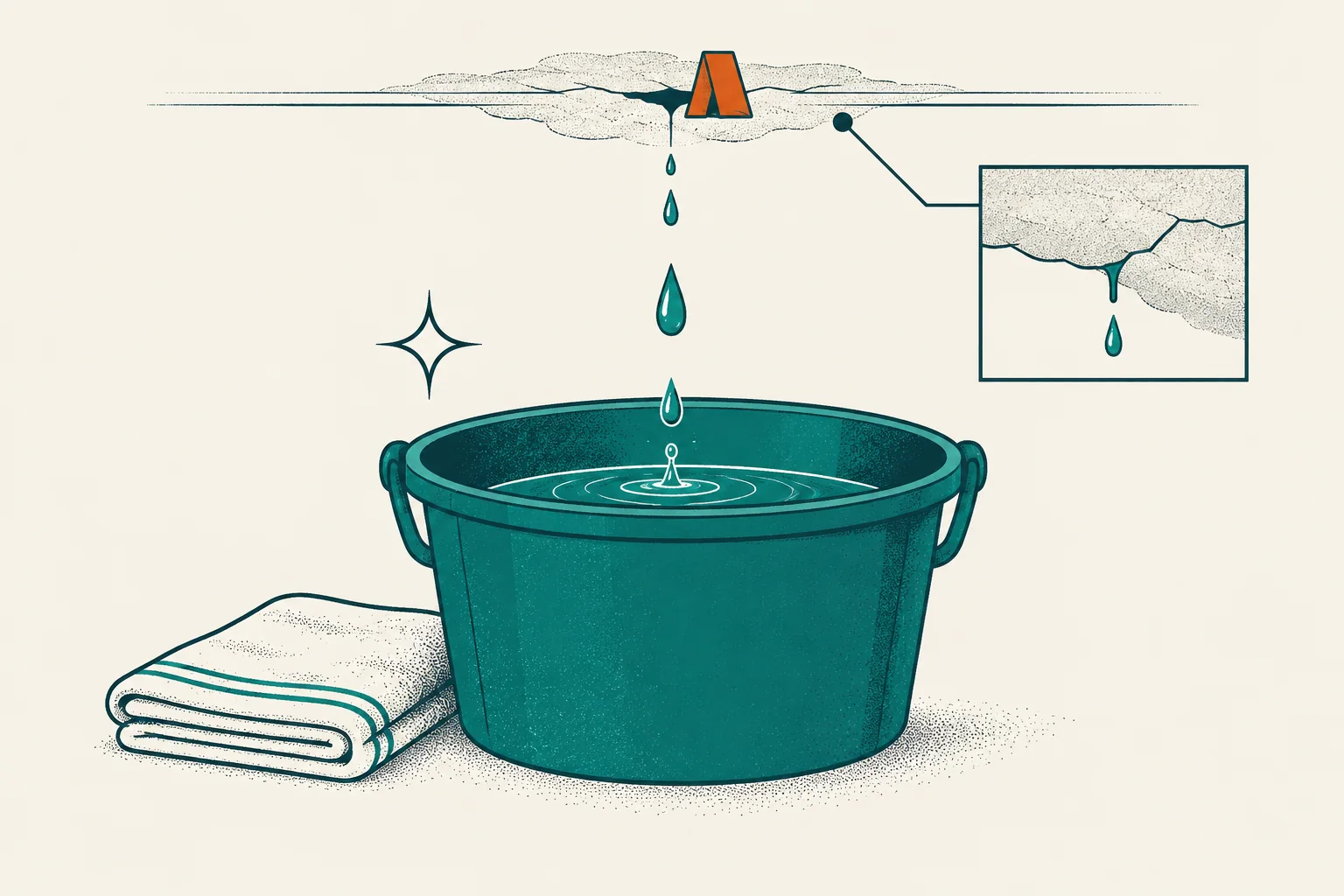
If the water is well away from electricity and the ceiling remains flat and stable, set a wide container under the drip. Put an absorbent towel beneath it to reduce splashing and slip risk. Do not puncture a bulge: a ceiling holding water can fail suddenly, and opening it can expose wiring or release contaminated water and debris.
2. Limit an interior water source if one may be involved
Not every ceiling leak starts at the roof. A plumbing line, bathroom, HVAC condensate drain or appliance above the stain may be responsible. If you can identify a safe, familiar shutoff for that fixture, stop its water supply. Do not assume rain proves a roof-covering failure; wind-driven rain, flashing, siding, windows and plumbing can create similar evidence.
3. Record what is happening
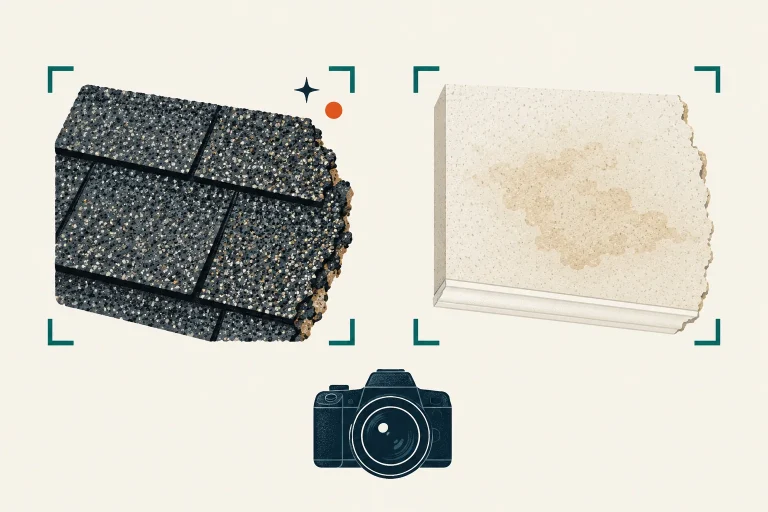
From a safe location, take wide and close photos or video of:
- the room and exact wet area;
- the first visible drip or stain boundary;
- the time, weather and whether rain was wind-driven;
- affected belongings and finishes; and
- any accessible exterior debris seen from the ground.
Do not clean away all evidence before recording it. Save relevant receipts and write down when the leak began, when it changed and whom you contacted. This record helps an inspector trace the route and may help an insurer evaluate a claim, but it does not prove cause or coverage.
4. Control moisture after immediate hazards are addressed
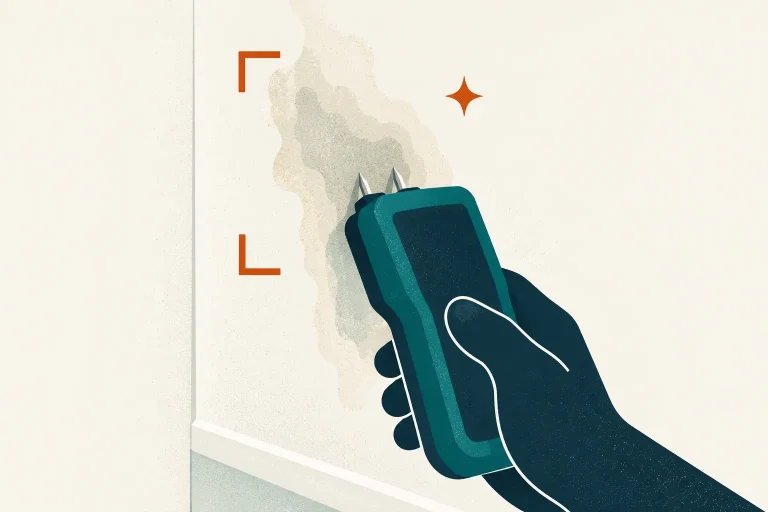
Remove standing water from safe, non-electrical areas with towels or a wet vacuum rated for the task. Ventilation and dehumidification may help only when electricity is safe and outside conditions make ventilation sensible. Do not aim fans into visible mold or contaminated water.
The EPA says wet or damp materials should generally be dried within 24 to 48 hours to reduce the chance of mold growth. That is a reason to act promptly, not a promise that every material is salvageable or that mold cannot occur sooner.
5. Arrange qualified assessment and mitigation
An active leak may require an emergency roofer or restoration contractor to stop additional entry. An independent inspector can document broader condition or provide a second opinion. Electrical involvement calls for a qualified electrician; visible movement or suspected structural damage may call for a structural engineer or local building official.
Use our role-by-role guide to choose the next professional.
What not to do during a roof leak
- Do not climb onto the roof or place a ladder on wet or unstable ground.
- Do not enter an attic during a storm, step between framing members or disturb wet insulation.
- Do not touch wet electrical devices or improvise electrical work.
- Do not staple or nail plastic into a roof from indoors.
- Do not accept a permanent repair based only on a ceiling stain without asking how the entry point was identified.
- Do not sign over insurance benefits or accept a high-pressure contract without understanding local law and the terms.
If you want to prepare before the next event, keep a modest set of indoor roof-leak emergency supplies. Supplies are for safe containment, not rooftop repair.
What the follow-up inspection should answer
A useful follow-up should connect exterior, attic and interior observations while stating inaccessible areas. Ask for:
- dated, location-specific photos;
- the observed condition rather than only a repair conclusion;
- the likely entry routes and what remains uncertain;
- any need for electrical, structural, moisture or mold evaluation;
- temporary work already performed; and
- a written permanent-repair scope.
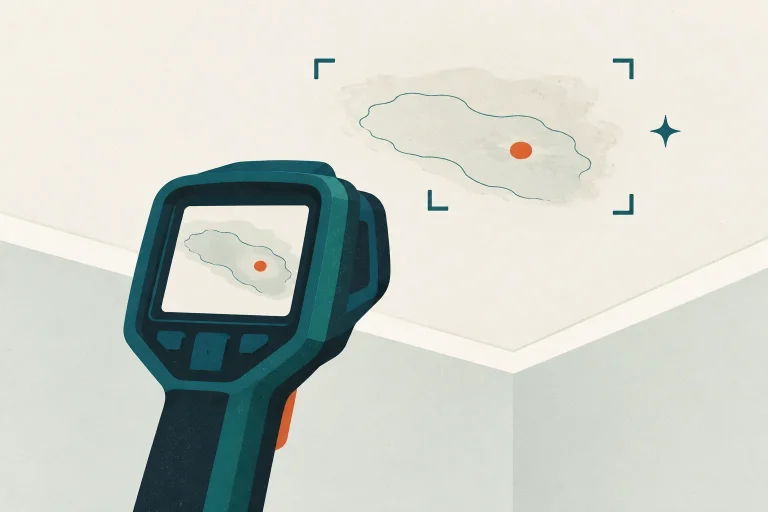
Water often travels along decking or framing before appearing at the ceiling. That is why the interior stain and exterior defect may not be vertically aligned. An attic roof inspection can add context when access is safe, but concealed assemblies may still require further investigation.
After the weather clears
Keep a simple incident file: photographs, inspection report, contractor proposals, invoices, product information and correspondence. Compare any repair or replacement recommendation with the documented location, extent and material condition. Our repair-or-replace framework explains how to separate evidence from a sales verdict.
Sources and editorial notes
- Ready.gov, Are You Ready?, damaged-building, electrical and structural-safety guidance; accessed October 17, 2026.
- U.S. EPA, A Brief Guide to Mold, Moisture and Your Home, prompt drying and moisture-control guidance; accessed October 17, 2026.
- Electrical Safety Foundation International, water-damaged electrical equipment, electrical evaluation guidance; accessed October 17, 2026.
- InterNACHI Standards of Practice, visual inspection scope and unsafe-access limitations; accessed October 17, 2026.
Editorial boundary: RoofInspectionUSA provides education and service referrals. It does not provide emergency response, inspect roofs, determine structural or electrical safety, or decide insurance coverage.