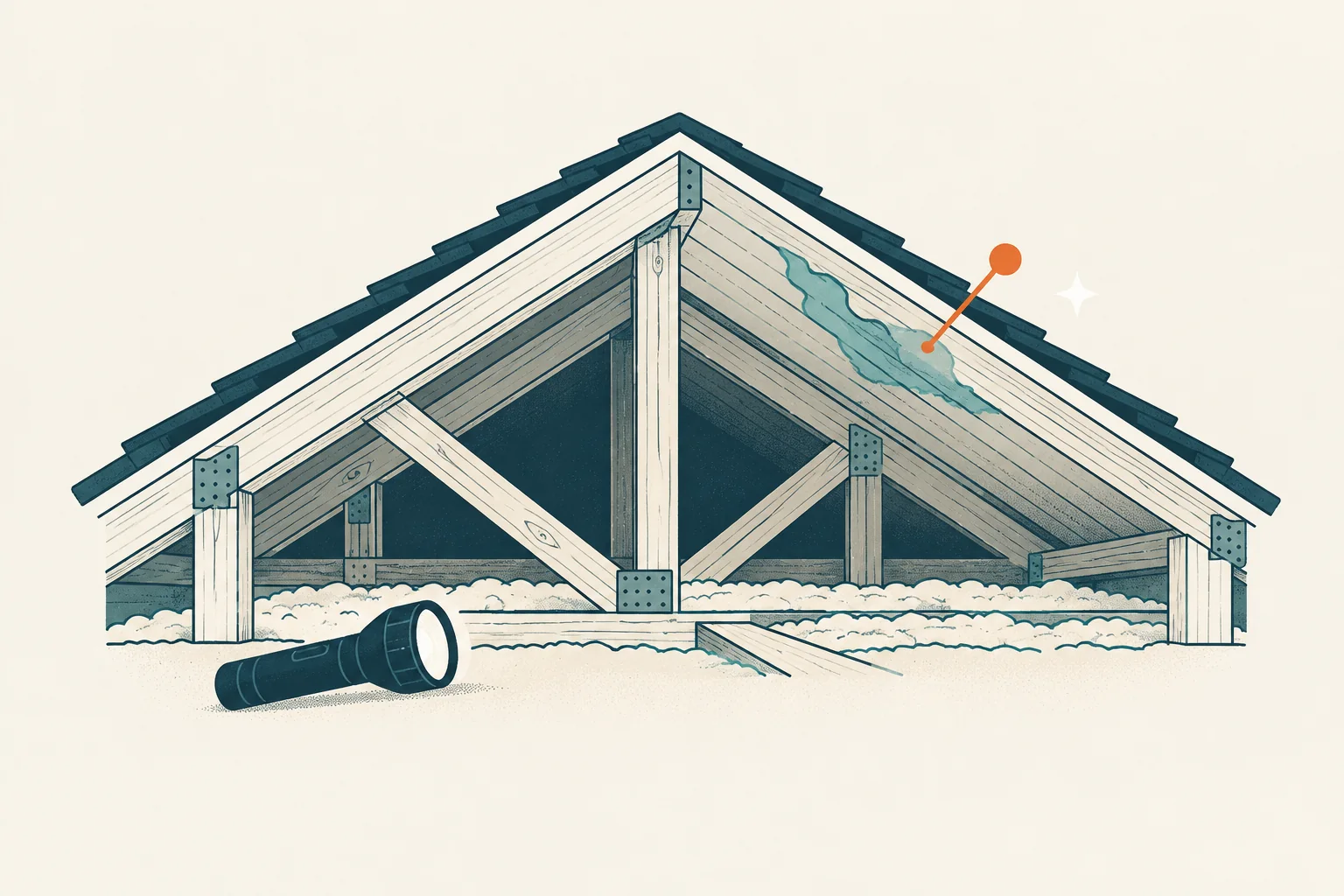
An attic gives an inspector a different side of the roof system. Where safely accessible, it can show the underside of decking, framing, penetrations, insulation and ventilation context that exterior images cannot. It can also show why a simple “roof leak” label is sometimes premature: rain entry, indoor air leakage, condensation and plumbing can create overlapping symptoms.
The attic is not automatically safe or fully visible. A responsible inspection documents access, observed evidence and limitations without treating every stain as current leakage.
What an attic inspection can reveal
Water staining and moisture patterns
Staining, damp material, rusted fasteners, water tracks and damaged finishes can show where water has been present. The pattern may help connect interior evidence to a penetration, valley or transition above.
But water travels along framing, fasteners and the underside of decking. The visible stain may not sit directly under the exterior entry. Old staining may also remain after a repair. Date-stamped photos, moisture readings and observation during relevant weather can add context without proving cause alone.
The underside of roof decking
Accessible decking may show discoloration, deterioration, openings, prior repairs, unusual fastener patterns or local deflection. An inspector should not assume structural capacity from a visual glance. Softness, widespread deterioration or movement may need a qualified roofer or structural engineer and a safely defined investigation.
Framing condition and configuration
Visible rafters or trusses can show alterations, splitting, displacement, moisture effects or damaged connections. Engineered trusses should not be cut or modified casually. Structural significance and repair design are engineering questions when conditions warrant.
Ventilation and air-leak clues
Blocked openings, disconnected ducts, compressed insulation, frost, condensation or uneven patterns may point toward moisture-management problems. The EPA notes that warm, moist indoor air entering a cold attic can condense and contribute to water damage and mold growth. Climate and roof design matter; there is no one ventilation prescription for every assembly.
Insulation and exhaust routing
An inspector may record visible insulation distribution and whether bathroom or other exhaust ducts appear to terminate improperly in the attic. Moving insulation may be outside the scope, and insulation can conceal decking, wiring, fragile ceiling surfaces or contamination.
What it cannot prove by itself
An attic view alone usually cannot establish:
- the exact exterior entry route;
- whether a dry stain is old or recently active;
- every condition above underlayment or flashing;
- mold species or health risk by appearance;
- code compliance for the entire assembly;
- structural capacity; or
- future leak-free performance.
Correlation matters. A useful inspection compares attic findings with roof-surface, drainage, penetration and interior observations and explains remaining uncertainty.
Why access may be limited
InterNACHI’s general Standards of Practice allow inspection of readily accessible roof structure from panels, doors or stairs, but do not require an inspector to enter unsafe attic spaces or move insulation. Limits can include:
- a small or high hatch;
- no safe walking surface;
- extreme heat or cold;
- exposed wiring or suspected electrical hazards;
- pests, contamination or vermiculite-like material;
- wet or damaged framing;
- stored belongings; and
- low clearance or inaccessible cavities.
The report should say where the inspector stood, what was visible and what remained concealed. “Attic inspected” is not enough if only a small area at the hatch was visible.
Homeowner safety: do not enter just to check
Do not enter an unfamiliar attic during a storm, after structural damage, or where access requires stepping on concealed ceiling surfaces. Keep away from wet electrical components, damaged framing, hot flues, pests and unidentified insulation. Falling through a ceiling can occur when a person steps between framing members.
If water is actively entering, follow the emergency roof-leak safe steps from occupied space. Let a qualified professional determine safe attic access.
Questions for the inspector
Ask the report to answer:
- How was the attic observed: at the hatch, from platforms or by entering accessible areas?
- Which parts were concealed or unreachable?
- Were materials visibly wet, and how was that assessed?
- Do stains appear correlated with an exterior feature?
- Is there evidence suggesting condensation or indoor air leakage?
- Which condition needs a roofer, HVAC professional, electrician, remediation professional or engineer?
- What follow-up would distinguish the leading explanations?
Read these answers alongside what a roof inspector looks for and the exterior observations.
Moisture and mold context
The EPA’s central advice is moisture control: address the water source and dry wet materials promptly, generally within 24 to 48 hours when feasible. Visible growth or musty odor deserves attention, but routine air sampling is often not the first step when a visible moisture problem is present.
Do not cover stains, add insulation or air-seal an attic before the active moisture source is understood and repaired. Those changes can hide evidence or alter drying.
What a useful report looks like
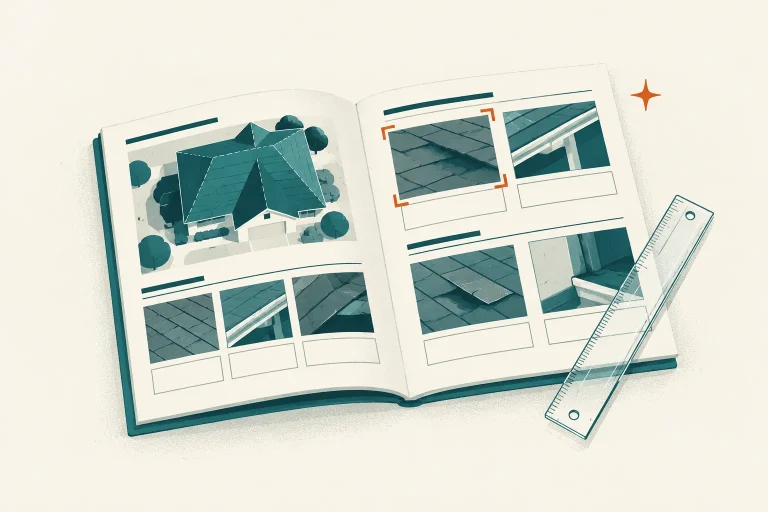
The attic section should include overview and close photographs, clear locations, access limits, observed conditions and next steps. It should distinguish statements such as:
- “dark staining was visible” from “active leakage was confirmed”;
- “elevated meter reading at this location” from “the roof entry point is here”; and
- “framing alteration observed” from “structurally unsafe.”
Use our guide to read the roof inspection report to translate those boundaries into action.
Sources and editorial notes
- InterNACHI Home Inspection Standards of Practice, accessible roof-structure and attic limits; accessed October 17, 2026.
- U.S. EPA, A Brief Guide to Mold, Moisture and Your Home, moisture control and drying guidance; accessed October 17, 2026.
- U.S. EPA, remodeling and indoor air quality, attic air leakage, condensation and climate context; accessed October 17, 2026.
Editorial boundary: RoofInspectionUSA does not assess attic safety, identify mold, provide structural analysis or diagnose a specific leak remotely.