Affiliate disclosure: RoofInspectionUSA may earn compensation from qualifying purchases when retailer links are activated. That would not change the price you pay. No compensated product links are active in this draft. We recommend supply categories based on safe indoor damage limitation, not hands-on product testing.
A roof leak kit is not a roof-repair kit. Its job is to help you keep people away from hazards, collect a manageable drip from a safe location, protect movable belongings and create a useful record while you arrange qualified help.
It should contain no ladder, roof tarp, roofing cement or instructions to climb. Exterior emergency work in wet or storm conditions carries serious fall and electrical risks.
Safety comes before the bucket
Leave the area and call emergency services or the appropriate utility when there is fire, arcing, a damaged utility line, structural movement or another immediate threat. Keep everyone away from a sagging or bulging ceiling. Do not puncture it. Do not touch a wet light, switch, outlet, cord, appliance or electrical panel.
The U.S. Consumer Product Safety Commission warns against touching wet appliances that remain connected to power and recommends professional evaluation of electrical equipment affected by flooding. A localized roof drip is not the same as a flood, but water and energized equipment remain a dangerous combination.
The indoor roof leak kit
1. Stable, wide containers
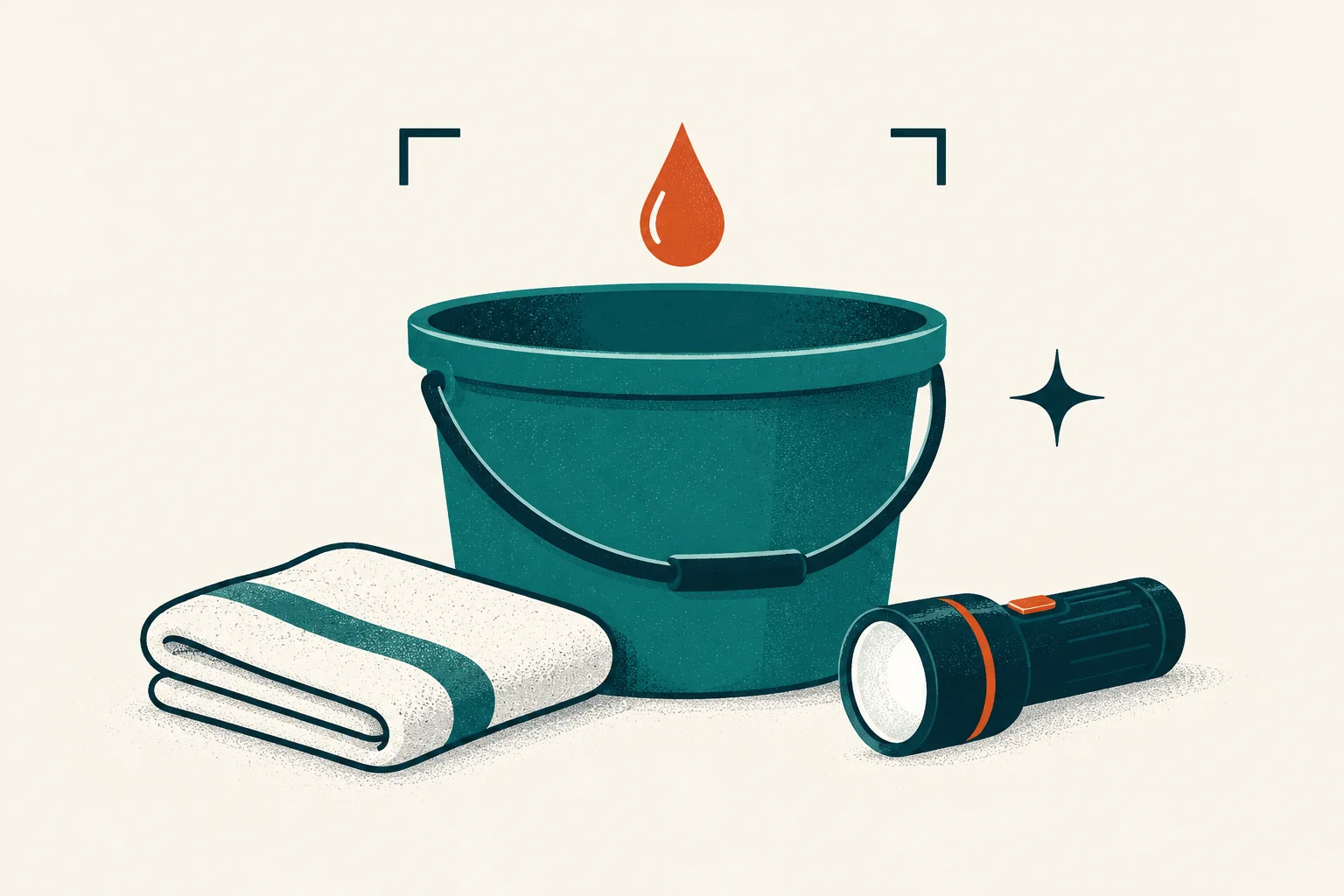
Keep two or three clean buckets or low, wide utility tubs in an accessible closet. A wider base is harder to tip, while a handle makes a partially filled container easier to move. Do not place a container where you must stand below a bulging ceiling or reach near electricity.
Add a waterproof tray for a slow drip and a second empty container so you can swap without carrying an overfilled bucket through the house.
2. Absorbent towels and pads
Store old towels or washable absorbent pads in a waterproof bin. Use them on a safe, stable floor around—not beneath—a container. Avoid loose piles that create a trip hazard.
Absorbent socks can help contain a small amount of clean water on a hard floor. They are not a solution for contaminated floodwater, sewage, widespread saturation or water near electrical equipment.
3. Heavy-duty plastic sheeting
Plastic sheeting can protect movable furniture or create a temporary catch surface indoors only when it can be positioned from the floor without fastening it to a ceiling or wall near wiring. Keep it away from heaters and open flames. It is not an invitation to tarp a roof.
FEMA’s Ready supply checklist includes plastic sheeting and duct tape for shelter-in-place uses. For a leak kit, a small roll of sheeting is useful primarily for protecting belongings after people are safe.
4. Painter’s tape and a permanent marker
Use painter’s tape to label a dry wall or floor near—but not on—the wet area with the date and observation. A marker helps label photo locations and supply receipts. Do not tape over finishes you plan to document, and do not attach materials to a wet or bulging ceiling.
5. Battery flashlight and spare batteries
Ready.gov lists a flashlight and extra batteries in a basic emergency kit. Battery lighting is preferable to candles during an outage. Store batteries separately if the flashlight manufacturer recommends it, and check them on a schedule.
A headlamp can leave both hands free on a normal floor, but it does not make an attic or roof safe to enter.
6. Nitrile or household work gloves
Gloves can protect hands while moving dry belongings or handling a clean container. They do not make contaminated water, mold, broken materials or electrical hazards safe. If water may contain sewage or storm contaminants, follow local public-health guidance and use trained cleanup help.
7. Heavy-duty trash bags and plastic ties
Use bags to isolate wet towels or small damaged items after photographing them. Ready.gov includes garbage bags and ties for sanitation in emergency kits. Keep sharp debris out of thin bags and do not discard claim-relevant property until you understand documentation requirements and health risks.
8. Phone power bank and charging cable
Your phone may be your camera, timeline, weather record and contact list. Store a charged power bank with the correct cable and test it periodically. Keep electronics away from the wet area.
9. Waterproof document pouch
Put insurer contact details, roof warranty information, prior inspection reports, contractor details and a one-page room list in a waterproof pouch. A digital backup stored away from the home is useful, but do not rely on cloud access during an outage.
10. A simple photo and receipt log
Keep a blank notebook or printed form with fields for time, weather, room, visible condition, action taken and file names. FEMA recommends photos and videos of damage and keeping repair or replacement receipts after severe weather.
Photograph a wide room view before moving safe-to-move belongings, then take closer details. Keep originals and annotate copies.
11. Hygrometer or basic temperature/humidity monitor
A monitor can help you track room humidity while drying proceeds. It cannot identify the source of a roof leak or confirm that wall and ceiling cavities are dry. Treat the readings as trend information.
12. Optional dehumidifier—with an electrical-safety boundary
A dehumidifier may support drying only after the water entry is controlled, power is safe and the unit can operate on a dry, appropriate circuit. CDC guidance recommends drying wet items within 24–48 hours when possible to reduce mold risk, but it also warns that cleanup conditions can carry structural and electrical hazards.
Do not run a dehumidifier through standing water, with wet cords, or in an unsafe room. For substantial water, contaminated water, affected electrical systems or hidden cavities, use qualified restoration help.
What not to put in the kit
- A ladder for storm-time roof access
- A roof tarp intended for homeowner installation
- Roofing cement, loose shingles or nail guns
- Candles for outage lighting
- A claim script or promise about coverage
- Bleach to mix with other cleaners
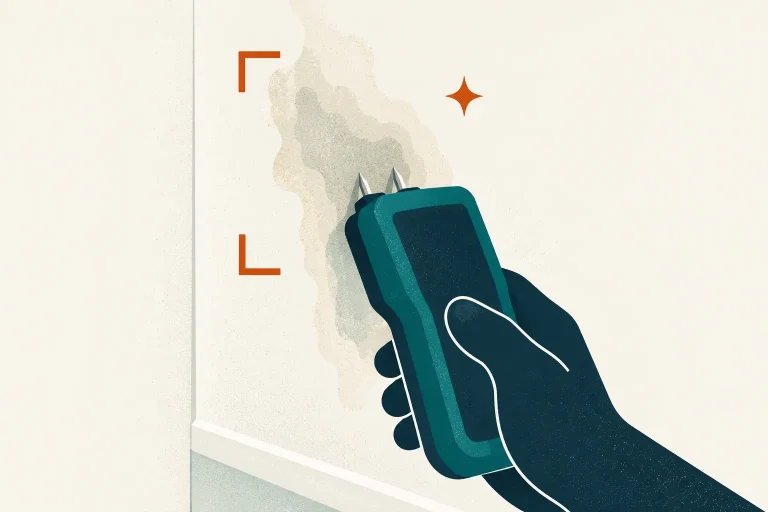
- A moisture meter marketed as a leak “detector” without context
These items can create more risk or false confidence than value.
Store and review the kit
Keep the kit on the occupied level in a dry, labeled bin—not in an attic you may be unable to reach safely. Review it every six months: test lights and the power bank, replace leaking batteries, wash towels, update contacts and add the current roof and insurer documents.
After using it, save the incident timeline with your homeowner roof inspection checklist and arrange an assessment of the source. Indoor damage limitation does not repair the roof.
Sources and methodology
- Ready.gov emergency supply checklist, flashlight, batteries, plastic sheeting, waste bags and power supplies; accessed October 17, 2026.
- CPSC flood electrical-safety warning, wet appliance and professional-evaluation guidance; released February 5, 2024.
- CDC: Dry Off Wet Items After a Storm, 24–48 hour drying guidance; reviewed August 26, 2026.
- FEMA: How to Document Damages After Severe Weather Events, photos, records and receipts; released April 16, 2025.
Method: category-level supply recommendations derived from official preparedness, electrical-safety, drying and documentation guidance. No product was purchased or tested.