An asphalt-shingle roof inspection is not just a count of missing tabs. Shingles are the visible covering in a larger water-shedding system that includes the deck, underlayment, edges, valleys, flashings, penetrations, ventilation, drainage and interior spaces. A good inspection connects those components while stating which ones were concealed.
The report should tell you what was visible on the inspection date, how it was observed, where each condition is located and what question—if any—needs a roofer, engineer or other specialist next.
Do not inspect from the roof yourself
Asphalt shingles can be slippery when wet, hot enough to injure or soften underfoot, loose at damaged areas, or unsafe because of slope and height. Walking can also change fragile evidence. Observe from stable ground or a safe window and let a qualified professional select access and fall-protection methods.
InterNACHI’s general home-inspection standard does not require an inspector to walk on a roof. Ground views, eave views, drones, pole cameras, accessible attic areas and roof-surface observation are methods—not quality grades. The report should explain which method was used and what it could not reveal.
Confirm the roof and shingle context
Before interpreting a symptom, the inspector should document:
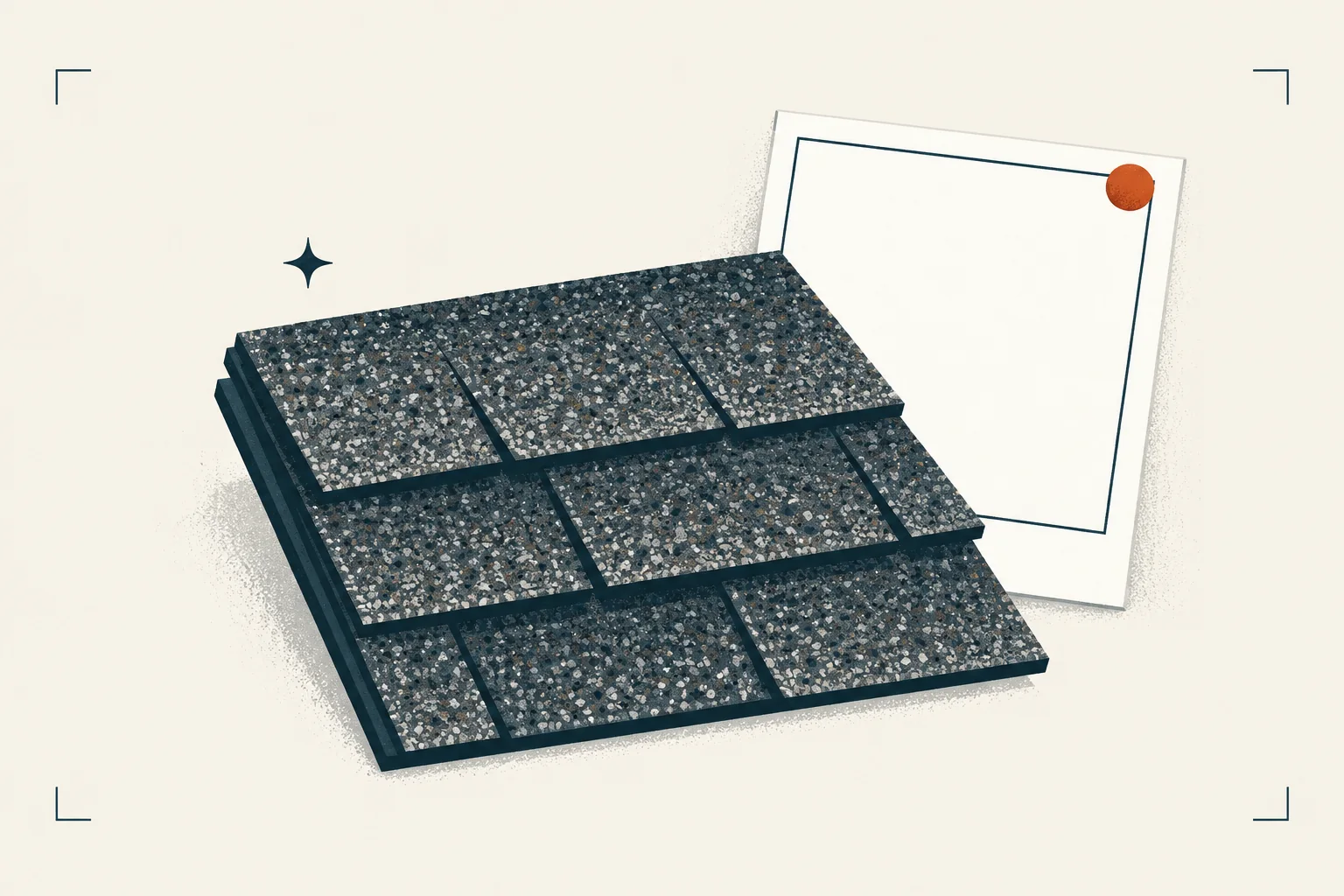
- whether the covering is three-tab, laminated/architectural or another asphalt product;
- roof planes, slopes and geometry;
- installation or replacement date and source, if known;
- number of visible layers where this can be observed without destructive work;
- prior repairs, additions and penetrations;
- product records or warranty documents supplied by the owner; and
- weather and access conditions during the visit.
Do not infer an exact age from color alone. Do not translate a marketing or warranty term into guaranteed field life. Exposure, installation, roof design and maintenance all affect performance.
Inspect the covering by location and pattern
The roof-plane review commonly records:
- absent or displaced shingles and tabs;
- cracks, tears, punctures and open joints;
- curling, cupping, buckling or distortion;
- surface wear and areas of pronounced granule displacement;
- seal condition where it can be evaluated without damaging material;
- exposed or backed-out fasteners;
- mismatched or repeated repair areas;
- debris, biological growth or tree contact; and
- changed conditions at ridges, hips, valleys, eaves and rakes.
Each observation needs context. Granule loss is not one diagnosis. It may vary with exposure, age, handling, drainage, manufacturing and impact. A lifted-looking edge in a distant image is not proof of a failed seal. A patch may be performing acceptably or may be hiding a recurring detail; the surrounding evidence matters.
IBHS research explains that asphalt-shingle wind resistance depends heavily on the sealed shingle and that real-world aging changes performance. Its hail work evaluates deformation, granule displacement and breach as separate damage modes. Those research categories help organize observations, but only an on-site, material-specific evaluation can apply them to a property.
Edges, valleys and drainage deserve equal attention
Water concentrates and changes direction at valleys, eaves, roof-to-wall junctions and around obstructions. Ask the inspector to show:
- edge and drip-edge conditions where visible;
- valley covering or flashing condition;
- gutter alignment, debris and overflow evidence;
- downspout discharge and exterior staining;
- roof areas that hold debris or direct concentrated runoff; and
- transitions between different slopes or additions.
A gutter full of granules is context, not a remaining-life test. New installations may shed loose granules, while older roofs can lose granules gradually or unevenly. The roof surface and records need to be evaluated together.
Flashings and penetrations often explain leaks
The inspection should address visible flashings at walls, chimneys, skylights, plumbing vents, exhaust vents and other penetrations. Useful observations include open joints, displacement, corrosion, incompatible repair materials, exposed fasteners and repeated sealant patches.
Sealant is not automatically a defect, but it should not be treated as a universal substitute for a properly integrated flashing detail. The report should identify what is visible and avoid claiming to verify concealed underlayment or step flashing when it cannot be seen.
Ventilation and attic observations add system context
Where safe and included, accessible attic areas may show:
- visible roof-deck staining or deterioration;
- water tracks near fasteners or penetrations;
- ventilation openings and apparent obstructions;
- insulation condition at visible areas;
- bathroom or kitchen exhaust termination; and
- framing changes, movement or damage that warrant specialist review.
Staining is evidence that moisture was present, not proof of the entry point or event date. Condensation and exterior leakage can create overlapping symptoms. Inspectors should not label mold, assess structural capacity or certify code compliance unless those services are expressly within their qualifications and written scope.
Common tools and what they cannot prove
| Method or tool | Useful contribution | Important limit |
|---|---|---|
| Binoculars or zoom camera | Safer detail from ground level | Angle and distance hide adhesion and concealed layers |
| Drone or pole camera | Broad imagery of high or steep planes | Imagery does not test seal strength or subsurface moisture |
| Roof-surface observation | Close view of material and transitions | Access may be unsafe or damaging; concealed work remains hidden |
| Attic observation | Deck, framing, ventilation and water context | Finished or inaccessible cavities remain unseen |
| Moisture meter | Supports comparison at accessible interior materials | A reading does not identify the roof entry point alone |
| Thermal camera | Shows surface temperature patterns | A pattern is not moisture proof without corroboration |
No gadget changes a visual inspection into a warranty, engineering analysis or complete leak test.
Storm findings need a baseline
For wind, map displaced material, edge and ridge conditions, affected and unaffected areas, debris and interior consequences. Use the wind-damage roof inspection guide for the full workflow.
For hail, the inspector should compare material-specific observations with distribution and collateral context instead of diagnosing from one dark spot. Review the hail-damage roof inspection guide.
Long-term wear and event effects can coexist. Our guide to roof damage versus normal wear and aging explains how dates, distribution and prior records make that distinction more useful.
What the report should deliver
Expect a written scope, methods, limitations, roof-system description, mapped photos, priorities and recommendations. Findings should identify a location and condition rather than use only labels such as “bad roof.” If repair is recommended, ask what visible evidence supports it and whether further opening or testing is needed before final price.
Use how to read a roof inspection report to separate condition, implication, urgency and next action. The report should not promise remaining service life, insurer acceptance or leak-free performance unless a separate written service expressly provides and defines such a promise.
When to arrange an inspection
Consider a material-specific inspection after high winds, hail or falling debris; when a new stain or leak appears; before a purchase; after installation; before a warranty deadline; or when a large repair recommendation lacks clear evidence. The timing should reflect the decision you need, not a universal calendar rule.
Sources and editorial notes
- InterNACHI Home Inspection Standards of Practice, visible roof-system scope, methods and exclusions; accessed October 17, 2026.
- ARMA publications, asphalt-roof system components and manufacturer-consensus installation/maintenance resources; accessed October 17, 2026.
- ARMA technical bulletins, current repair, installation and weather-related topics; accessed October 17, 2026.
- IBHS Roof 101, roof-system terms and asphalt-shingle wind/hail test context; accessed October 17, 2026.
- IBHS: Natural Weathering and Hazard Exposure, aging, wind and hail mechanisms; accessed October 17, 2026.
Editorial boundary: This field guide does not diagnose a particular roof, direct roof access, provide installation instructions, estimate remaining life or determine warranty or insurance responsibility.