Roof damage and normal aging are not always competing explanations. A covering can weather gradually for years and then change during a storm. An old repair can also leak after a new event without every nearby condition being new.
The practical question is not “Is the roof old or damaged?” It is: Which conditions developed over time, which conditions changed around a specific event and what evidence supports each conclusion? That answer requires dates, distribution, material knowledge and a clear inspection scope.
The short distinction
Wear and aging are progressive changes associated with ordinary environmental exposure, material movement, maintenance history and service conditions. Event-related damage is a physical change connected to a particular occurrence such as wind, hail, falling debris or impact.
Age alone does not prove failure. A storm date alone does not prove every observed condition is storm-created. Insurance coverage and product-warranty responsibility are separate decisions governed by their written terms.
Use four evidence lenses
1. Timing
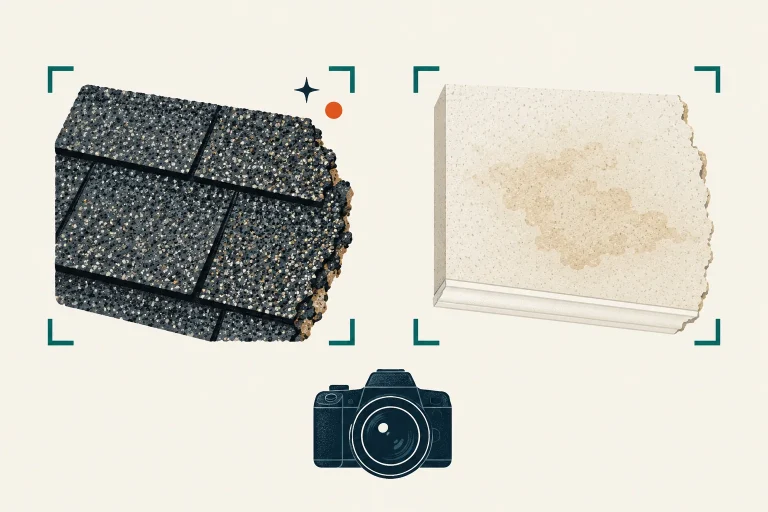
Look for dated photos, prior inspection reports, installation records, repair invoices and the first observed interior symptom. A clear pre-event image showing material in place can be valuable. So can evidence that a condition was documented months earlier.
Memory is useful but imperfect. Record exactly what you know: “No ceiling stain was visible during the September 1 photo” is more defensible than “the roof was perfect before the storm.”
2. Distribution
Gradual weathering may differ by exposure, shade, drainage and roof geometry. Event effects may form a directional, localized or impact-related pattern—but there is no universal storm pattern for every roof and event.
An inspector should map both affected and apparently unaffected areas. One detail photo without a roof-plane overview cannot show distribution.
3. Material behavior
Asphalt shingles, metal panels, tile, wood, slate and low-slope membranes do not age or respond to hazards in the same way. A conclusion should fit the installed material and system, not a generic roof checklist.
4. Consequence and function
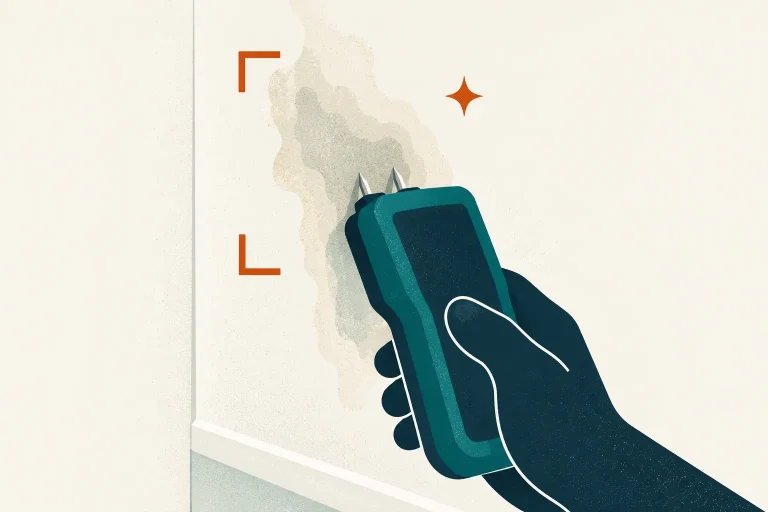
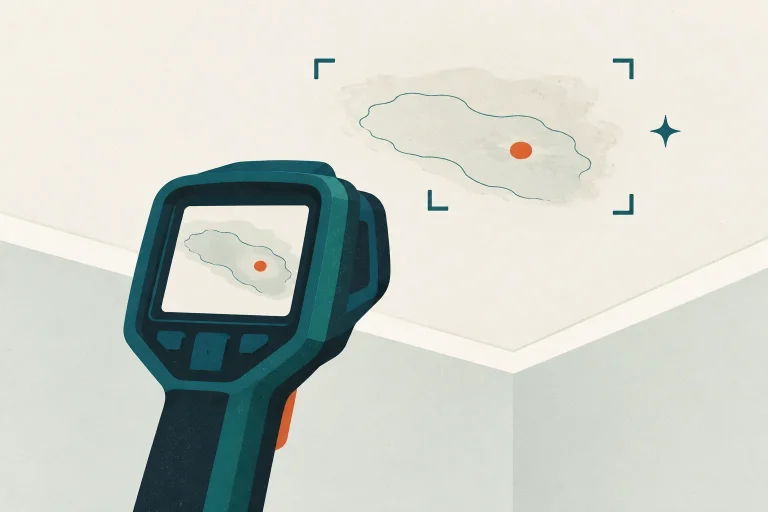
Ask whether the condition changes water shedding, attachment, drainage, structural support or only appearance. The answer may require more than visual inspection. A cosmetic change is not automatically functional failure; a small opening at a critical transition may matter more than its size suggests.
Common asphalt-shingle comparisons
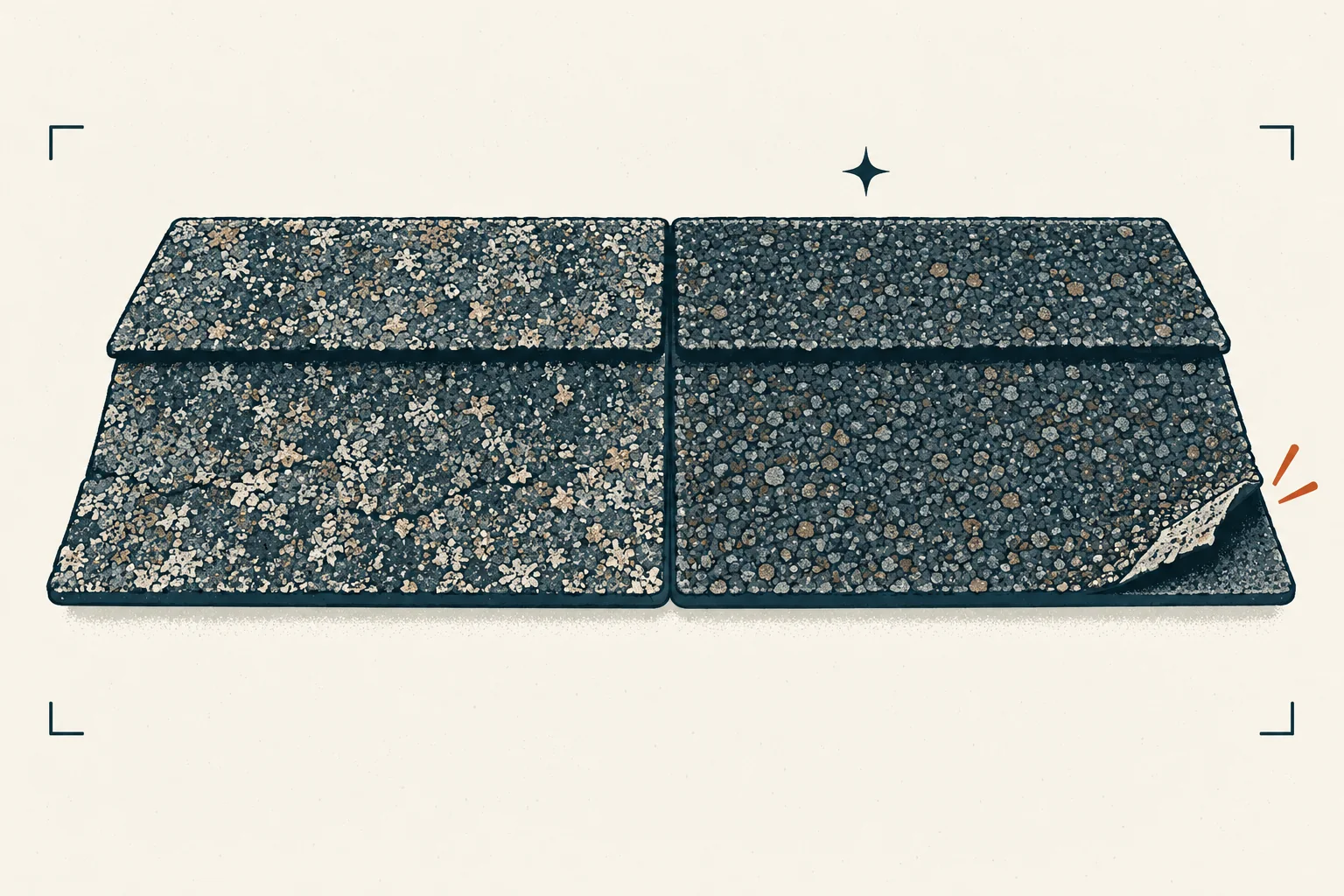
Long-term asphalt-shingle observations can include gradual granule loss, surface exposure, thermal movement, sealant change, curling, cracking, biological growth and repeated maintenance at flashings. Storm observations may include newly missing or displaced shingles, tears, fractures, creases, impact-related breaches or fresh exposure where material detached.
Those words do not determine cause by themselves:
- Granules can be displaced by weathering, traffic, manufacturing variation or impact.
- A crease can be associated with wind movement, but handling or prior repair can alter a shingle too.
- An unsealed tab may reflect aging, installation, contamination, temperature history or event forces.
- A missing shingle is a condition; its detachment mechanism still requires context.
IBHS’s Roof Aging Farm research studies how real environmental exposure changes roof materials and hazard performance over time. Its wind research notes that asphalt-shingle sealant strength can decline with age, increasing wind vulnerability. Aging can therefore be relevant to how damage occurs without answering which portion of a specific loss is covered.
See the complete asphalt-shingle roof inspection guide before drawing conclusions from a surface symptom.
Metal-roof comparisons
Metal systems can show coating weathering, surface oxidation, sealant aging, fastener-gasket deterioration, movement around penetrations or cosmetic waviness over time. Event-related observations may include displaced panels or edge metal, opened seams, impact punctures, windborne-debris damage or abrupt deformation.
Some changes can be cosmetic, while an open seam, displaced flashing or compromised penetration can affect water control. Metal also expands and contracts; movement details and system type matter. A metal-roof inspection should identify whether the roof is standing-seam, through-fastened or another system before evaluating fasteners and seams.
Tile, wood, slate and membrane roofs
- Tile: Long-term weathering, installation stress and foot traffic can produce breaks that resemble impact. Event context, fracture surfaces and distribution require specialist interpretation.
- Wood shakes or shingles: Splitting, checking, erosion and biological effects evolve over time. Fastener failure, displacement and debris impact require separate context.
- Slate: Existing fractures, failed fasteners and prior repairs can coexist with new impact. Walking can create additional breakage.
- Low-slope membranes: Seam aging, flashing movement, punctures, surface wear and drainage issues may overlap. Ponding or a leak does not automatically identify when a membrane defect formed.
Do not transfer one material’s diagnostic rules to another.
Weathering is not a universal service-life clock
Sun, temperature swings, moisture, wind exposure, roof slope, color, ventilation, installation and maintenance all affect performance. Two roof planes on one house can weather differently. Product labels and warranty years are not a promise of identical field life in every climate and assembly.
IBHS notes that ultraviolet exposure degrades asphalt and that roof temperatures and daily temperature ranges can be severe. Its research also emphasizes that new-product test performance changes with real-world aging. These findings support condition-based evaluation; they do not provide a remote expiration date for an individual roof.
What a useful inspection report should say
A report that helps distinguish damage from wear includes:
- the reported event and observed symptom timeline;
- installation age source and confidence, not just a guess;
- material and system type;
- all observation methods and access limits;
- mapped locations and overview/detail photos;
- prior repairs and known maintenance;
- affected and unaffected reference areas;
- observations separated from cause opinions; and
- further evaluation needed to answer concealed, structural or material-specific questions.
General home-inspection standards, including InterNACHI’s, define a visible and non-invasive scope and do not require prediction of remaining life or insurability. If you need an event-causation opinion, confirm that it is expressly included and that the professional has relevant material experience.
Both conditions can be true
Consider an older shingle roof with weakened seals and one plane that loses tabs during a wind event. The age-related vulnerability and the event-related displacement may both be relevant. A sound report does not force one label onto every condition; it maps the evidence and explains the limits.
The same is true when a long-standing flashing detail begins leaking during wind-driven rain. The event may reveal an existing weakness. Construction responsibility, warranty terms and insurance coverage still require separate review.
Decide the next step from the unanswered question
Use a residential roof damage assessment when you need a documented condition record. Use the wind or hail guide for hazard-specific questions. If the condition is already documented and the decision is construction scope, compare options with the repair-or-replace evidence framework.
Sources and editorial notes
- IBHS: Natural Weathering and Hazard Exposure, everyday exposure, wind mechanisms and material-specific hazard response; accessed October 17, 2026.
- IBHS Roof Aging Farm Research, research program on real-world aging and changes in hazard performance; accessed October 17, 2026.
- InterNACHI Home Inspection Standards of Practice, visual inspection scope, roof-access limitations and excluded life/insurability predictions; accessed October 17, 2026.
- Asphalt Roofing Manufacturers Association technical bulletins, manufacturer-consensus technical topics and repairability context; accessed October 17, 2026.
Editorial boundary: This guide provides a comparison framework, not a property-specific cause opinion, remaining-life estimate, warranty decision or insurance-coverage determination.