
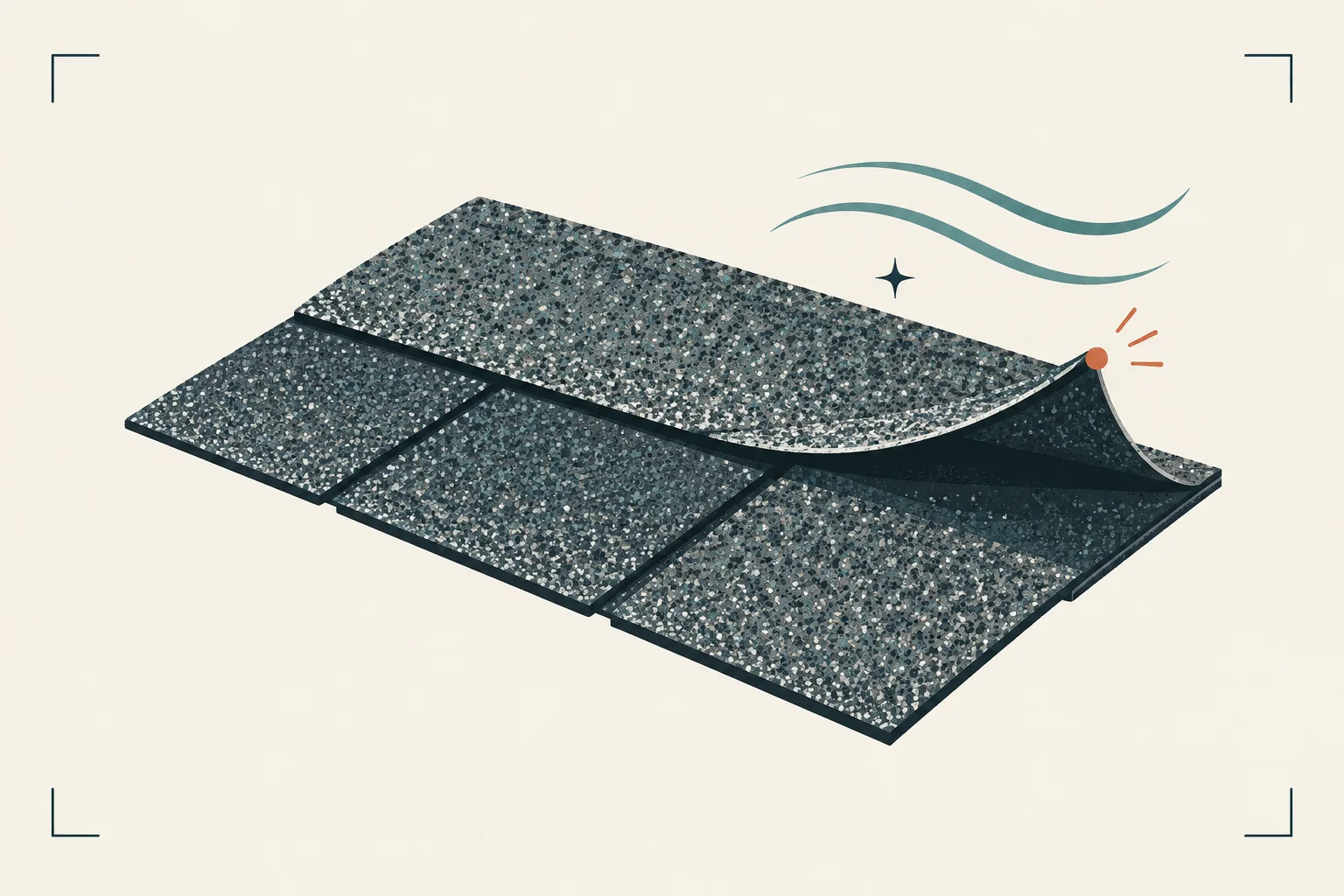
A wind-damage roof inspection should answer more than “Are any shingles missing?” Wind can act differently at roof edges, corners, ridges, attached structures and openings. Once part of a covering lifts or detaches, nearby materials and the underlayment can face loads and rain exposure they were not designed to receive.
The useful result is a location-specific record of what changed, how the roof was viewed, what water pathways are visible and what remains uncertain. A single creased shingle or distant storm report is not enough to establish cause for an entire roof.
Wait until the site is safe
Stay away from downed lines, unstable trees, loose overhead material, standing water near electricity and visibly sagging building areas. Call emergency services for immediate life-safety hazards. Do not climb onto a storm-wet or damaged roof.
OSHA’s residential fall-protection guidance is written for employers and workers, but it illustrates a critical point: roof work requires planned protection, equipment and training. A homeowner should not imitate a professional inspection from a ladder or roof surface.
From stable ground, record each side of the building, debris locations and visible changes. Use the storm-damage documentation workflow to preserve orientation, detail and timeline evidence.
How wind can affect a roof system
IBHS explains that wind creates suction pressures that act to lift roof coverings. For asphalt shingles, sealant strength and the pressure acting across a shingle matter. Once one tab fails, adjacent shingles can face additional force, starting a progression of cover loss and potential water entry.
Other materials respond differently. Wind may displace tiles or exploit attachment weaknesses. Metal-panel failure can involve a larger sheet of covering, exposing a broad deck area. These are mechanisms, not a remote diagnosis of a particular home.
Wind-driven rain can also enter at damaged or open roof coverings, vents, soffits, wall interfaces, windows and doors. FEMA’s post-Hurricane Michael advisory documented water intrusion through several building-envelope routes. A wet ceiling therefore does not automatically identify a hole directly above it.
Exterior areas an inspection should address
Edges, corners and ridges
Ask for clear views of eaves, rakes, corners, ridges, hips, drip edges and perimeter flashing. These locations can face different wind pressures from the field of the roof. The report should identify the exact edge or plane—not just say “wind damage present.”
Roof covering
Depending on material, observations may include:
- missing, displaced or folded covering;
- lifted edges or tabs;
- tears, cracks, punctures or impact from windborne debris;
- newly exposed underlayment or decking;
- displaced ridge or hip material;
- tile movement or breakage;
- open or distorted metal seams and panels; and
- changed areas next to older repairs.
“Lifted” needs context. An inspector should state whether a component was visibly raised during the visit, displaced from its installed position or merely appeared uneven from a distance. Manually lifting material to create a photo can alter evidence and damage the roof.
Flashing, penetrations and rooftop components
Vents, skylights, chimney flashings, pipe penetrations, satellite or solar attachments and roof-to-wall transitions should be documented where included and safely accessible. Look for displacement, missing pieces, open joints, impact and sealant or fastener conditions without assuming one surface symptom is the leak source.
Gutters, soffits, fascia and attached structures
Detached gutters, bent fascia covers, opened soffits and damaged porch or patio covers can provide context and create separate water-entry routes. They do not prove that the main roof covering failed in the same way.
Interior and attic evidence
Where normal, safe access exists, an inspection may record:
- active water or new staining;
- damp insulation or decking;
- visible daylight at a changed opening;
- displaced or damaged framing;
- rust or water tracks at fasteners; and
- the relationship between an interior condition and exterior roof geometry.
Interior evidence helps define the consequence and potential pathway. It cannot always date the condition or identify the exact entry point. Finished cavities and concealed underlayment remain limitations unless a different, authorized investigation is performed.
Material context changes the inspection
For an asphalt covering, the inspector should evaluate seal condition, displacement patterns, fractures, missing material, edge zones and age-related vulnerability. Our asphalt-shingle roof inspection guide covers the complete material system.
For metal, the inspection should distinguish standing-seam from through-fastened systems and address panels, seams, clips or exposed fasteners as applicable, edge securement, penetrations, coatings and corrosion. See the metal-roof inspection guide.
Tile, slate, wood and membrane roofs require their own material knowledge. Do not apply an asphalt-shingle checklist to every covering.
What a defensible report includes
- event and prior-condition information supplied by the homeowner;
- inspection date, weather and access conditions;
- roof type and visible material;
- every observation method used;
- overview and detail photos tied to locations;
- the distribution of affected and unaffected areas;
- collateral and interior evidence;
- prior repairs and maintenance conditions;
- inaccessible or concealed areas; and
- recommendations linked to specific findings.
Ask the author to separate an observation (“three tabs absent along the west rake”) from a cause opinion, repair scope and insurance conclusion. The contractor prices construction. The insurer applies the policy. An inspector documents condition within the agreed scope.
Wind damage, aging or both?
Age and everyday exposure can weaken a roof before a storm. IBHS research describes how asphalt-shingle sealant resistance changes over time, increasing vulnerability to wind. That does not mean every aged condition was created by the latest event, or that age rules out event-related change.
Useful distinctions come from dated baseline photos, fresh versus weathered surfaces, debris locations, directional or patterned distribution, prior repair records and material-specific analysis. Read roof damage versus normal wear and aging for a fuller evidence framework.
What to do after the inspection
Address openings and active water safely, then compare any proposed work with the documented locations. Save original photos, inspection reports, temporary-work invoices and estimates. If you choose to file an insurance claim, contact the insurer promptly and follow its documentation requests; coverage and deadlines vary.
Sources and editorial notes
- IBHS: Natural Weathering and Hazard Exposure, wind pressures, roof-cover failure progression and material differences; accessed October 17, 2026.
- FEMA: Best Practices for Minimizing Wind and Water Infiltration Damage, observed building-envelope damage and water-entry routes after Hurricane Michael; accessed October 17, 2026.
- InterNACHI Home Inspection Standards of Practice, visible roof-system scope and limitations; accessed October 17, 2026.
- OSHA: Fall Protection in Residential Construction, professional work-planning and fall-hazard context; accessed October 17, 2026.
Editorial boundary: This article provides general education. It does not diagnose wind damage, date a condition, direct roof access, determine code compliance or decide insurance coverage.