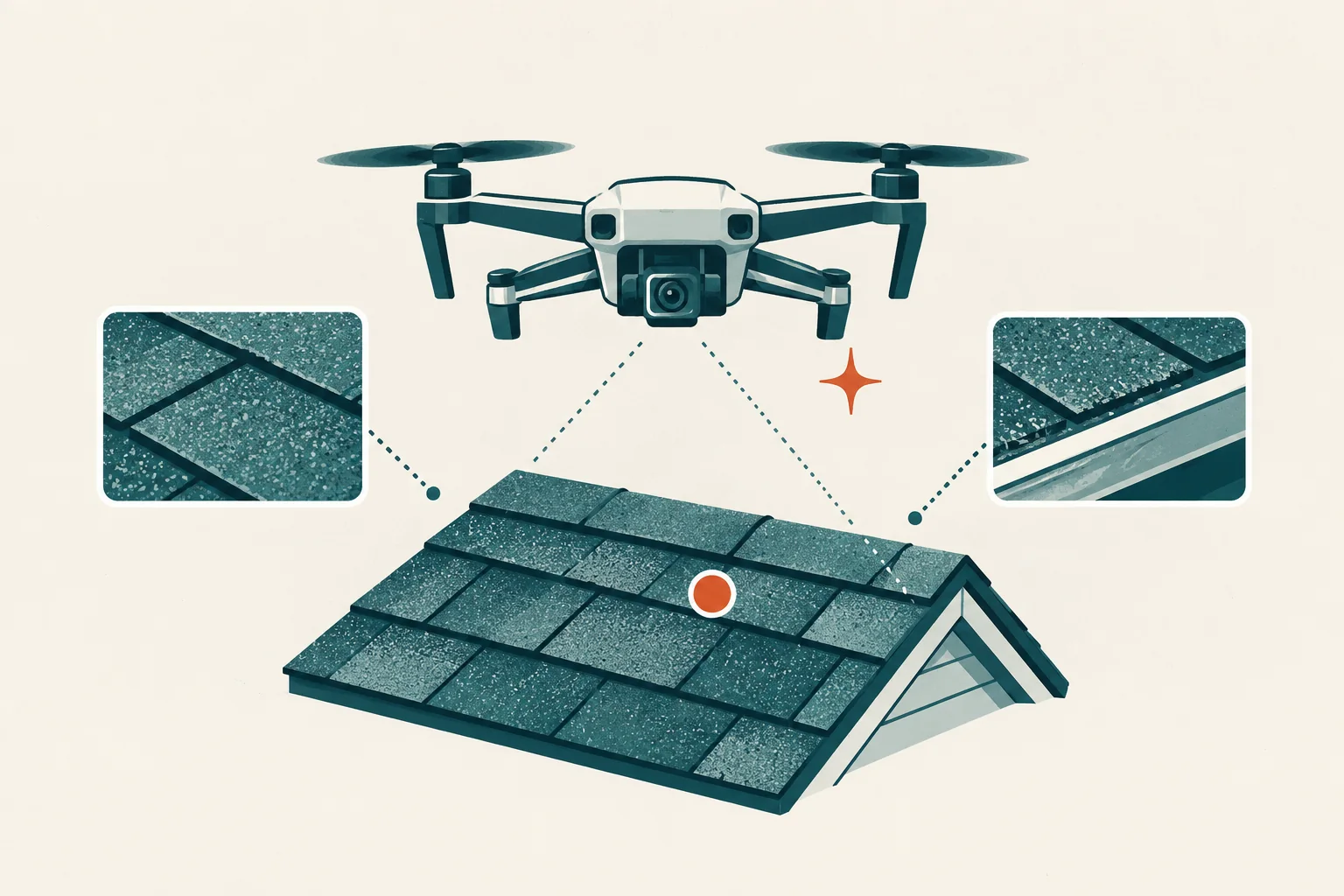
A drone can produce close aerial images of slopes that are steep, high, fragile or difficult to see from the ground. It may reduce the need to walk on the covering, but it does not turn photographs into a complete diagnosis.
There is no dependable nationwide price for a drone roof inspection. The meaningful comparison is the written scope: flight feasibility, property complexity, image quality, inspection analysis, interior observations and final deliverable.
What changes the cost
Ask for an itemized quote rather than relying on an online average. Price can change with:
- roof size, height, geometry and number of structures;
- travel and site setup;
- controlled airspace or other flight-planning needs;
- weather delays and return-visit terms;
- number and type of photographs or video;
- orthomosaic, measurement, thermal or other processing;
- whether a qualified inspector interprets the images;
- attic/interior observations and moisture investigation; and
- report detail, turnaround and intended use.
A low-cost photo-only flight is not the same product as an inspection report that connects exterior imagery with accessible interior evidence and states limitations.
When drone observation adds value
Drone imagery can be useful for:
- obtaining broad and close views without foot traffic on a fragile surface;
- documenting high, steep or multi-level roofs;
- creating dated post-storm records;
- comparing large areas and repeated details;
- showing a homeowner or contractor the location of a finding; and
- screening where a different close-access method may be needed.
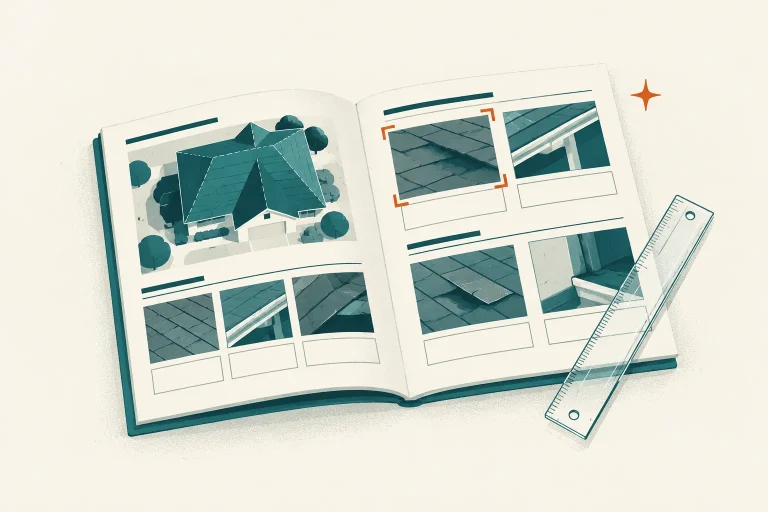
It can also improve location context: a wide view shows which slope contains a condition, while a closer image shows detail. Ask the report to retain both.
What a drone cannot confirm by itself
Standard aerial imagery does not directly establish:
- concealed underlayment or flashing condition;
- deck softness, fastener resistance or material adhesion;
- whether a lifted edge is sealed beneath;
- hidden moisture or the exact route of a leak;
- structural capacity;
- installation details covered by overlapping material; or
- future performance or remaining service life.
Thermal cameras also have limits. Apparent temperature differences can reflect solar loading, shading, material, air leakage or moisture, and interpretation depends on conditions. A thermal pattern is not automatic proof of a roof leak.
Pair aerial views with attic observations, interior evidence and other methods when the question requires them.
FAA rules matter for paid inspections
The Federal Aviation Administration says small drones flown for work or business generally operate under 14 CFR Part 107. The remote pilot must hold the appropriate certificate or be under direct supervision of a certificate holder. Part 107 includes registration, visual-line-of-sight, airspace and operating requirements; some operations need authorization or a waiver. Rules for flights over people, vehicles and at night include additional conditions.
Ask the operator:
- Who is the remote pilot in command?
- Can I verify the pilot certificate and drone registration?
- Is airspace authorization needed here?
- How will people, neighboring property and vehicles be protected?
- What weather and visibility conditions cancel the flight?
- What liability insurance applies to the operation?
Local privacy, trespass and land-use rules may also apply. A pilot certificate does not give permission to launch from any property or disregard privacy.
Drone operator and roof inspector may be different roles
A skilled pilot can create excellent images without being qualified to interpret roof construction or leakage. A skilled inspector may hire or supervise a pilot. Clarify who is responsible for:
- flight safety and legal compliance;
- selecting image locations;
- interpreting conditions;
- connecting findings to interior evidence; and
- signing the final report.
The report should identify the observation method and any areas missed because of obstruction, glare, resolution, angle, weather or flight restriction.
Compare proposals with the same checklist
| Scope item | Questions to ask |
|---|---|
| Deliverables | Original-resolution stills, video, annotated report, map or measurements? |
| Image ownership | Can you retain and share original files? |
| Analysis | Who interprets images, and under what inspection standard? |
| Interior context | Are attic and ceiling observations included? |
| Cancellation | What happens if weather or airspace prevents flight? |
| Limitations | Which conditions require hands-on or destructive follow-up? |
| Timing | When are files and the report delivered? |
Compare the total product with the broader roof inspection cost guide, not the flight fee alone.
Frequently asked questions
Is a drone inspection better than walking the roof?
Neither method is universally better. Drone images reduce foot traffic and improve access to some views; close roof-surface observation can reveal details images miss. Safety, material and the inspection question determine the method.
Can a drone find a roof leak?
It may identify a plausible exterior condition, but images alone usually cannot prove the water route. Leaks often require exterior, attic and interior correlation.
Can I fly my own drone for a quick look?
Recreational and business flights have different rules, and the operation must still be safe and legal. A homeowner should not fly near people, emergency response, controlled airspace or conditions they do not understand. A personal flight also does not become a professional inspection.
Does an insurer accept drone photos?
Acceptance and requested documentation vary. Ask the insurer or adjuster what is required; do not assume images establish cause or coverage.
The decision rule
Choose a drone service when the aerial perspective meaningfully answers part of your question and the provider explains the remaining gaps. A useful drone inspection is not “a camera over the roof.” It is a safe, legal collection method inside a clearly scoped evidence process.
Sources and editorial notes
- Federal Aviation Administration, Part 107 overview, operating and certification framework; accessed October 17, 2026.
- Federal Aviation Administration, certificated remote pilots, business operations, airspace and waiver context; accessed October 17, 2026.
- InterNACHI Home Inspection Standards of Practice, inspection method and limitation context; accessed October 17, 2026.
Editorial boundary: Flight legality depends on current federal, state and local requirements and the proposed operation. Verify the operator and scope directly.