A roof inspection may identify one repairable opening, widespread material distress or evidence that is still inconclusive. “The roof is old” is not enough to choose replacement, and “the leak is small” is not enough to assume a small repair will solve it.
The sound decision ties the proposed work to five things: extent, distribution, cause, supporting-condition evidence and repairability. Cost and ownership plans matter, but only after the physical scope is understood.
Start by translating the report into evidence
Before requesting prices, mark each finding in the inspection report as:
- observed: a location-specific condition or measurement;
- inferred: a probable cause that still needs confirmation;
- limited: an area not visible or safely accessible; or
- recommended: an action, further evaluation or maintenance item.
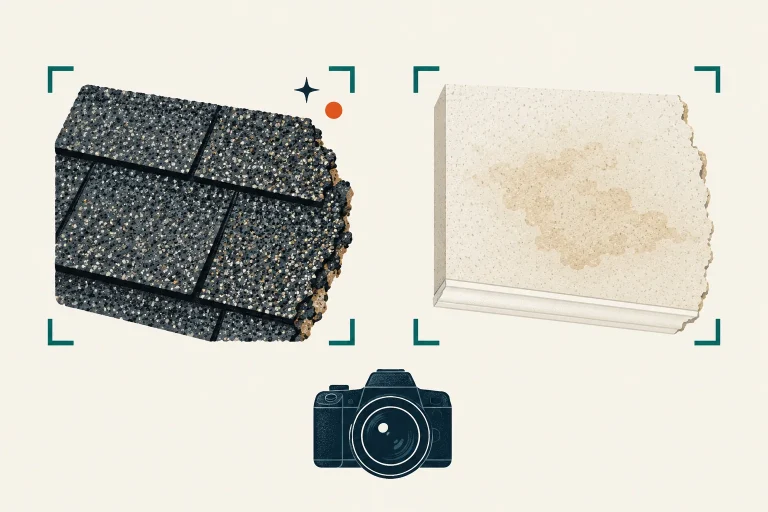
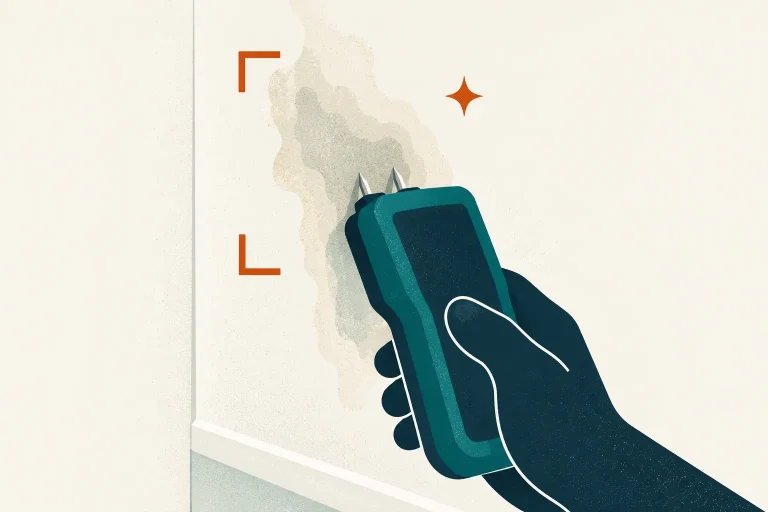
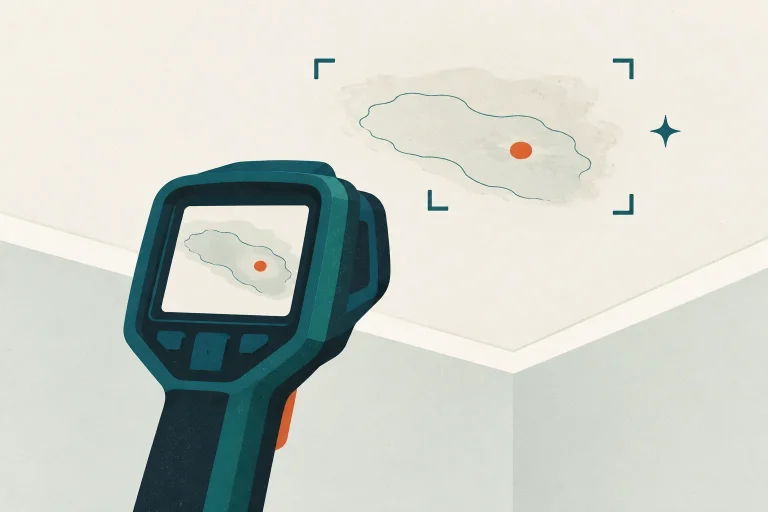
Ask for clarification when a report says only “old,” “worn” or “replace soon.” Useful evidence includes which slopes or components are affected, whether problems are isolated or repeated, the condition of flashings and penetrations, signs visible from the attic, and what prevented observation.
An inspection is not normally a remaining-life guarantee. InterNACHI’s general Standards of Practice expressly say inspectors are not required to predict life expectancy or certify a roof. Treat a predicted number of years as an opinion whose method and limitations should be stated.
When a focused repair may be reasonable
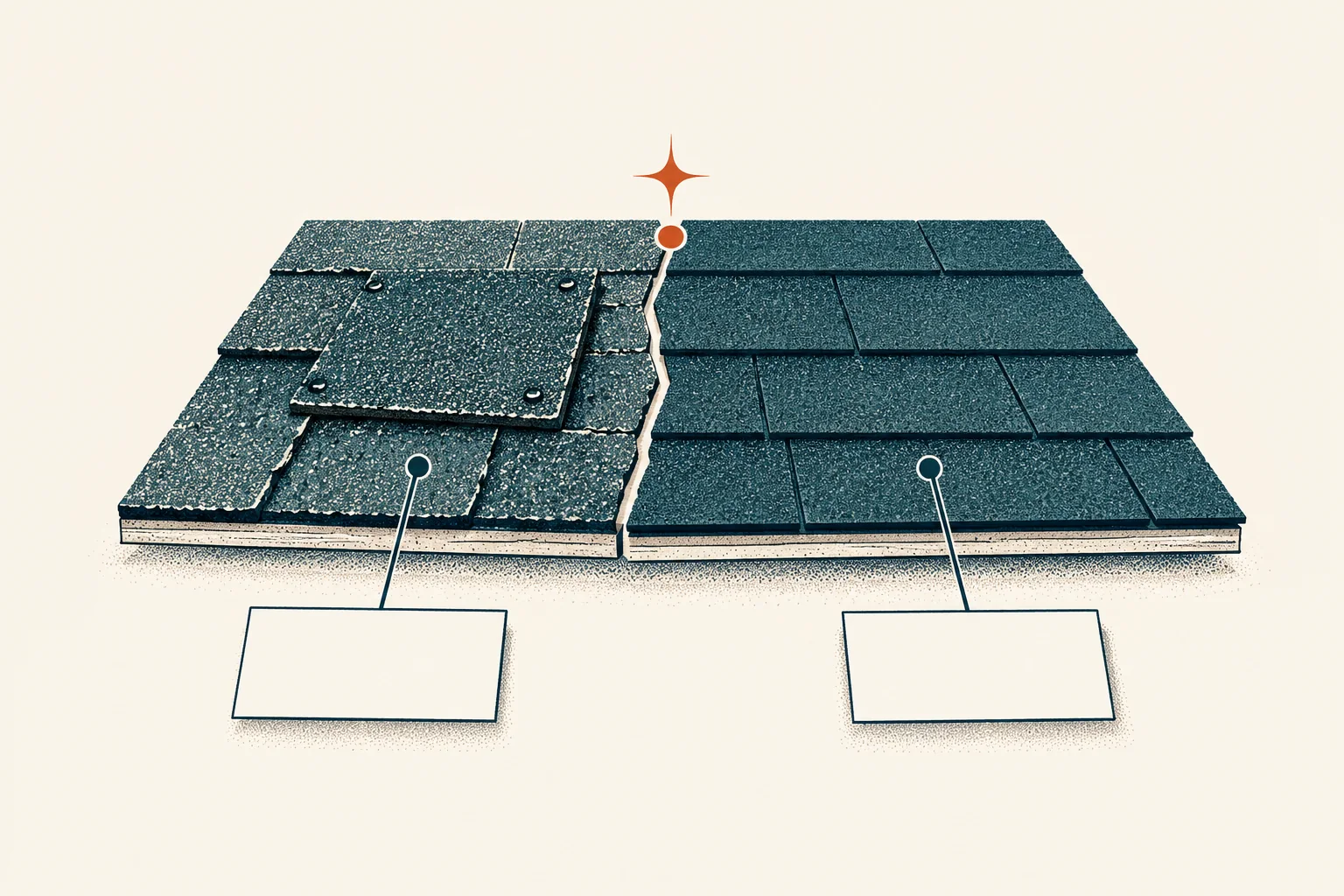
A repair deserves consideration when the evidence supports a localized, accessible problem and the surrounding system can accept the work. Examples can include:
- a discrete flashing defect around one penetration;
- a small area disturbed by a branch or wind event;
- a limited number of missing or damaged units with compatible replacements available;
- a gutter, edge-metal or sealant detail that can be corrected without masking a larger failure; or
- a workmanship issue confined to a defined transition.
This is not a do-it-yourself diagnosis. The contractor should explain how the repair will integrate with the existing assembly, whether disturbing adjacent material could cause damage, and what labor or material warranty applies.
Evidence that can support broader work
Replacement or a larger rehabilitation scope may be better supported when several conditions converge:
- similar deterioration appears across multiple slopes or large areas;
- the covering has lost integrity in a way isolated patches cannot restore;
- repeated repairs have not controlled water entry;
- decking or other supporting materials require access that means removing broad areas of covering;
- incompatible past layers or details prevent a durable repair;
- required transitions, drainage or ventilation corrections are system-wide; or
- a manufacturer-approved repair is unavailable for the existing material and configuration.
No single bullet automatically requires a full replacement. Material, roof design, local requirements, weather exposure and contractor methods all affect feasibility.
Do not let a percentage rule make the decision for you
Online advice often presents a universal “25% rule” or another simple threshold. Building-code provisions vary by adopted code edition, jurisdiction, roof type, work classification and exceptions. Insurance contract terms are a separate question. Ask the local building department which currently adopted rule applies to the proposed scope, and ask the insurer to explain any policy decision in writing.
A contractor can describe code-related work, but the authority having jurisdiction interprets its adopted code. An adjuster can evaluate a claim, but does not replace the contractor’s construction scope or an engineer’s structural analysis.
A comparison table for proposals
Ask each bidder to price the same documented scope where possible.
| Question | Repair proposal | Replacement proposal |
|---|---|---|
| What observed finding does it address? | Exact location and suspected entry route | Distributed conditions and affected areas |
| What is removed? | Units, flashing or transition materials | Covering, underlayment and identified accessories |
| What happens if damaged decking is found? | Unit price or change-order method | Unit price or included allowance |
| How is water managed at transitions? | Integration detail | New flashing/edge/valley detail |
| What remains unchanged? | Adjacent covering and its limitations | Framing, gutters or other excluded systems |
| What warranty applies? | Repair-specific written terms | Labor and manufacturer terms, registration duties |
Compare exclusions as carefully as totals. Permits, disposal, ventilation, flashing, gutters, solar-panel handling, code upgrades and interior damage may be inside one quote and outside another.
When to get an independent second opinion
Consider independent verification when:
- the proposed scope is expensive or changes from repair to replacement;
- the inspection came from the company selling the work;
- cause is disputed or the visible evidence does not match the proposal;
- structural movement, deflection or extensive decking damage is suspected;
- multiple bids describe materially different problems; or
- a claim, sale or financing deadline makes the decision consequential.
An inspector can document condition; a roofer determines a constructible repair scope and price; a structural engineer evaluates structural questions within an agreed scope. See inspector versus roofer versus adjuster versus engineer for the boundaries.
Watch for pressure that outruns the evidence
The FTC recommends checking licensing and insurance, getting multiple written estimates and reading contracts after weather emergencies. Pause when someone:
- promises insurance approval or a “free roof”;
- asks for a large cash payment before materials or work;
- insists you sign immediately to keep a price;
- will not separate observed damage from proposed work;
- discourages a second opinion; or
- offers to manipulate a claim or hide the true price.
Address an active leak promptly, but distinguish safe temporary mitigation from a permanent contract. Follow these safe first steps if water is entering now.
A defensible decision record
Save the report, dated photos, competing scopes, permit information, product specifications, warranties and reasons for the selected option. Write the decision in one sentence: “We chose this scope because the evidence showed ___ across ___, while ___ remained serviceable/uncertain.”
That record will not eliminate uncertainty, but it makes the choice traceable—and makes it easier to notice when a proposal is selling urgency instead of solving the documented problem.
Sources and editorial notes
- InterNACHI Home Inspection Standards of Practice, inspection limits and roof scope; accessed October 17, 2026.
- Federal Trade Commission, home repair scams, contractor-screening guidance; accessed October 17, 2026.
- Federal Trade Commission, avoiding scams after weather emergencies, estimates, contracts and payment guidance; accessed October 17, 2026.
Editorial boundary: RoofInspectionUSA does not inspect roofs, sell repairs, interpret a specific contract or code, provide engineering or legal advice, or decide insurance coverage.