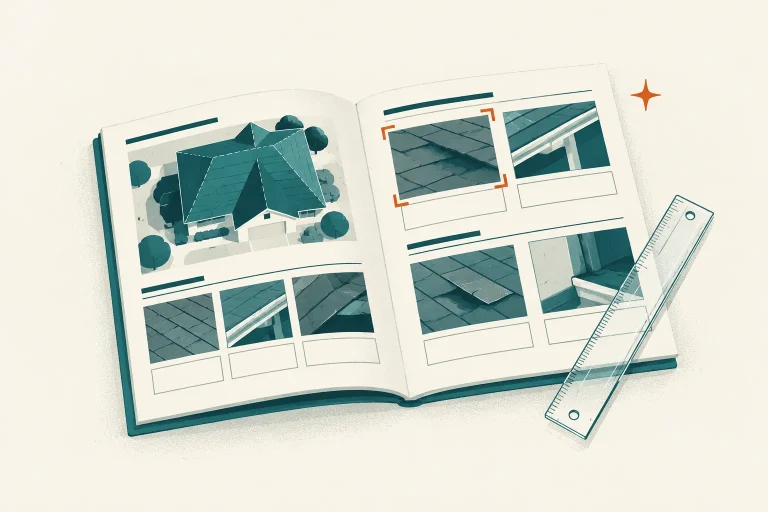
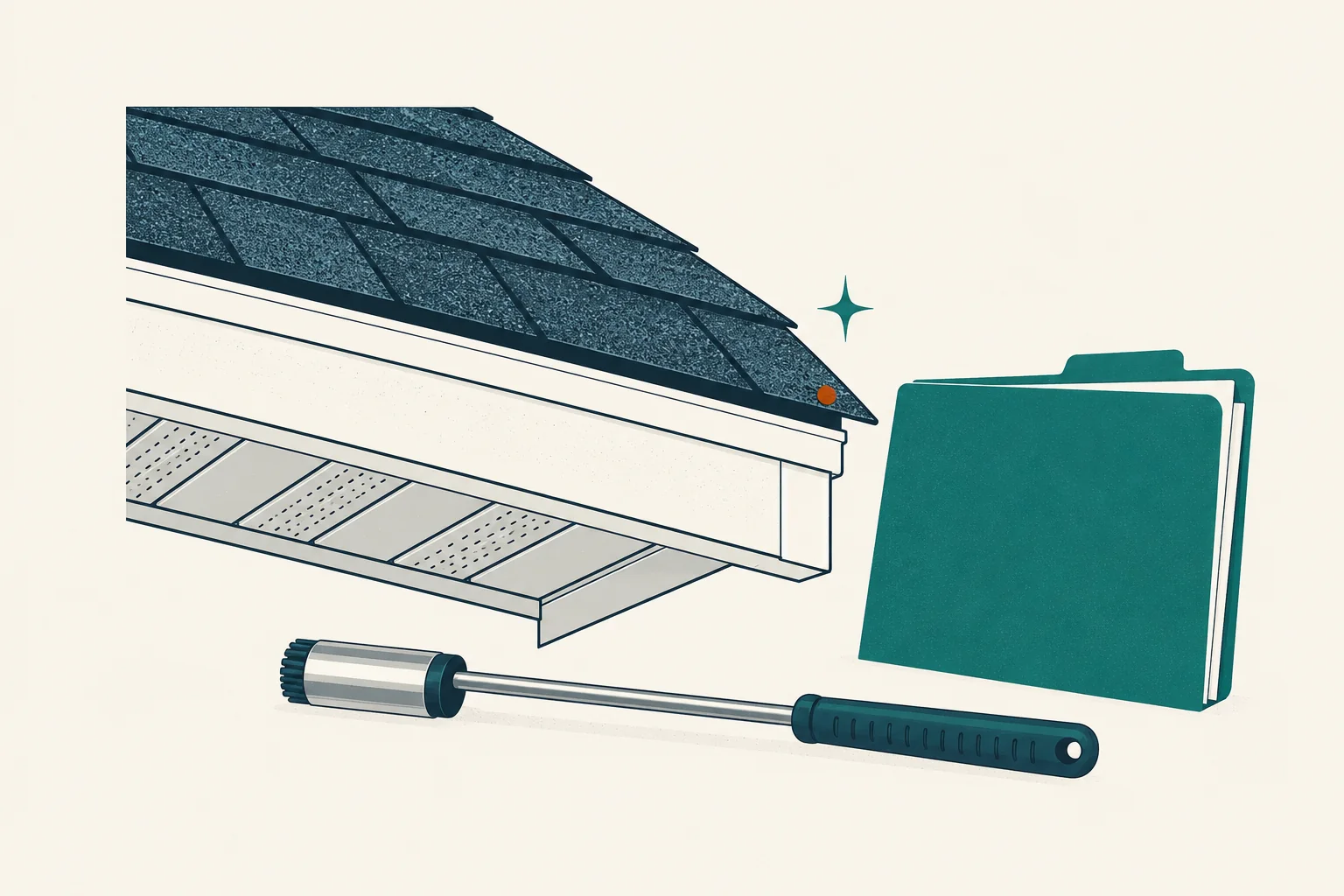
A new roof should end with more than a final invoice. A post-installation inspection creates a baseline, checks the signed scope against observable work, confirms cleanup and gathers the records needed for warranties and future maintenance.
It is not an invitation to climb onto the roof. Use ground-level photos, contractor documentation, safe interior observation and—when the project or risk warrants it—an independent inspector.
Before final walkthrough
Collect the contract, approved change orders, material list, permit information, manufacturer instructions referenced in the scope, payment schedule and promised warranties. List each unresolved question while the work is fresh.
Ask the contractor for completion photos showing areas that will be difficult to view later, including flashing transitions, penetrations, valleys, underlayment stages and any replaced decking. Photos do not prove every installation detail, but they create a more useful record than exterior finish photos alone.
Ground and property review
Walk stable ground in daylight and record:
- roof planes and edges from several directions;
- visibly uneven, lifted or displaced areas;
- gutters, downspouts, fascia and siding affected by the work;
- vents, skylights, chimney areas and wall intersections;
- driveway, landscaping, outdoor equipment and windows;
- leftover debris, packaging and loose fasteners; and
- completed cleanup and material removal.
GAF’s homeowner project checklist recommends a contractor walkthrough, viewing the roof with binoculars or contractor drone photos, checking gutters and landscaping, and requesting another magnetic sweep when loose nails remain.
Interior and attic baseline
From safely accessible areas, photograph ceilings beneath roof transitions and prior leak locations. If the attic has normal safe access, record visible decking, penetrations, ventilation and insulation without leaving a proper walking surface. Do not enter a cramped, hot, electrically hazardous or structurally uncertain space.
The goal is a dated baseline, not proof that concealed work is perfect.
Match the work to the contract
Review each line item:
- covering manufacturer, product and color;
- underlayment and leak-barrier locations;
- starter and ridge materials;
- flashing replacement or reuse;
- ventilation changes;
- decking quantities and supporting photos;
- gutters or accessories;
- permits, inspections and final approvals where applicable;
- cleanup, disposal and protection; and
- approved changes and final price.
Ask for written clarification when the completed work differs. Do not rely on memory or a verbal promise.
Closeout documents
Keep:
- signed contract and change orders;
- final invoice and proof of payment;
- permit and final inspection record if applicable;
- product labels, quantities and installation date;
- manufacturer warranty and registration confirmation;
- contractor workmanship warranty;
- before, progress and completion photos; and
- contact and license/insurance records.
Warranty requirements differ. TAMKO’s current warranty center, for example, asks owners to retain installation invoices and product information, while some enhanced warranties require contractor registration. GAF likewise distinguishes base and enhanced warranty registration. Read the actual warranty for your product and installation date.
When an independent closeout inspection helps
Consider one when the project is high value, the roof is complex, prior leaks existed, change orders were substantial, the contractor and owner disagree, or documentation is incomplete. Define the inspection scope: visible installation, contract comparison, attic/interior baseline, photo record and unresolved questions.
A visual inspection cannot confirm every concealed fastener or underlayment detail. InterNACHI’s standard makes similar boundaries explicit by excluding confirmation of fastening or installation unless separately within scope.
After closeout
Store records off-site or in backed-up cloud storage. Schedule safe ground-level observations after the first significant rain and at an appropriate future interval. Report a new stain or leak promptly under the contract and warranty process; do not make unauthorized repairs before checking how they affect coverage.
Related guide: For a reusable field-by-field review, open the residential roof inspection checklist.
Sources
- GAF homeowner roofing-project checklist, cleanup, walkthrough and warranty records; accessed October 17, 2026.
- TAMKO Warranty Center, installation records and registration distinctions; accessed October 17, 2026.
- InterNACHI Standards of Practice, visual-inspection limitations; accessed October 17, 2026.