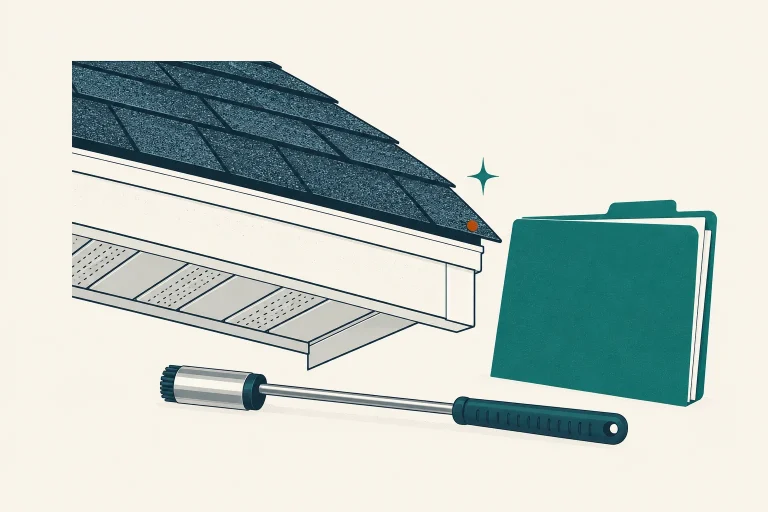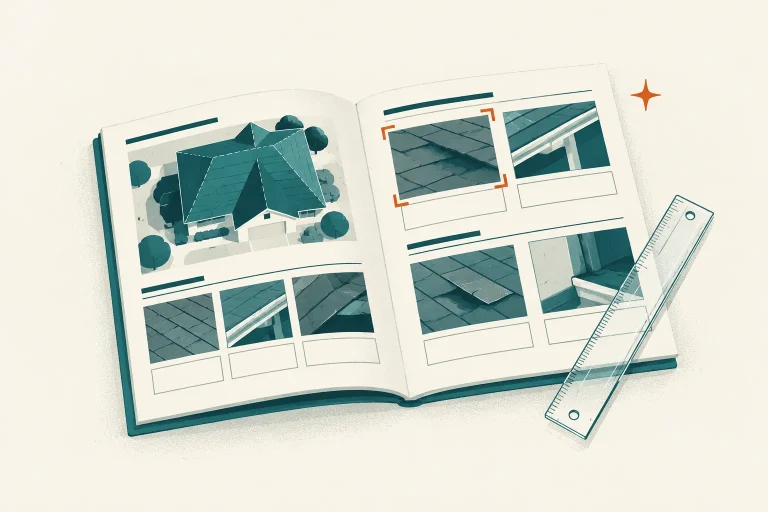
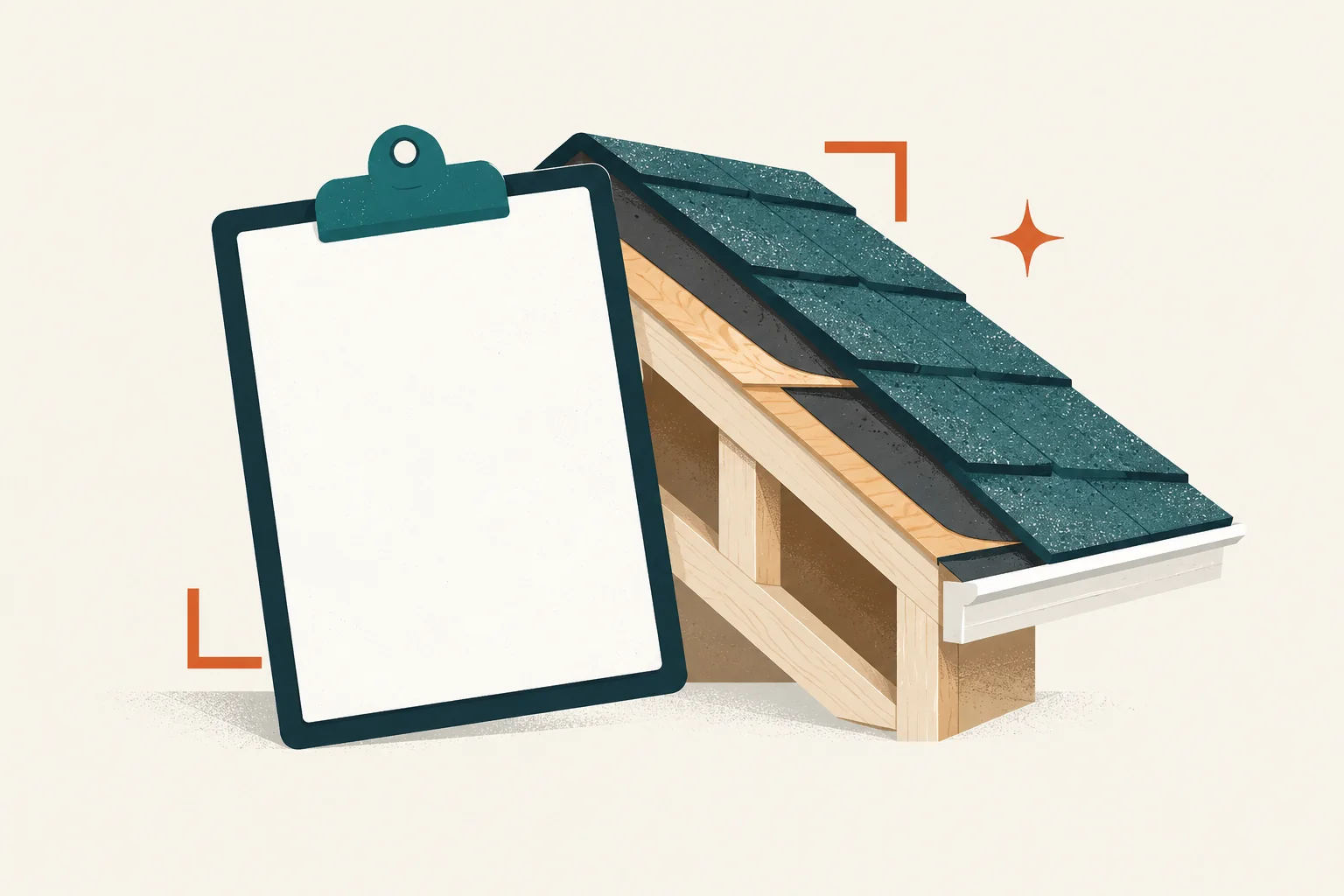
A residential roof inspection is a documented, on-site look at the visible and accessible parts of a home’s roof system. It should help answer three practical questions:
- What conditions were visible on the inspection date?
- Which items need maintenance, repair, further evaluation or prompt action?
- What could not be inspected or confirmed?
It is not a guarantee that the roof will not leak, a promise of remaining service life or automatic proof that an insurer will cover a loss. InterNACHI’s Standards of Practice, one useful benchmark for general home inspections, define the work as a non-invasive visual examination of accessible areas. They also state that an inspector is not required to walk on a roof, perform a water test, predict service life or certify the roof.
That boundary is useful, not evasive. A good inspection makes the evidence and its limits clear enough for you to choose the next safe step.
What a residential roof inspection should cover
The exact scope depends on the inspector, property, weather and agreement you sign. Confirm the scope before the visit. A useful roof-focused inspection commonly addresses these areas.
Roof-covering materials
The inspector identifies the visible covering—such as asphalt shingles, metal panels or tile—and looks for conditions such as missing, displaced, cracked, curled, corroded or visibly deteriorated areas. A visual observation cannot reveal every concealed fastener, underlayment condition or installation detail.
Edges, drainage and penetrations
Roof edges, gutters, downspouts, valleys, flashings, vents, skylights and chimneys deserve attention because transitions and penetrations are common water-entry locations. The report should distinguish an observed condition from a conclusion about where water entered.
Accessible structure and attic areas
Where access is safe and included, the inspector may observe visible roof framing, decking, insulation and ventilation from an attic access, panel or stair. Staining, damp materials, rusted fasteners or daylight can be relevant evidence, but each has multiple possible causes. Structural capacity, mold identification and code compliance may require different specialists.
Interior leak evidence
Ceiling stains, peeling finishes and moisture patterns can show that water has been present. They do not, by themselves, identify the exterior entry point. Water can travel along decking, framing or fasteners before becoming visible indoors.
Inspection limitations
Snow, rain, wind, steep slopes, fragile materials, solar panels, limited attic access and unsafe conditions can restrict the inspection. These limitations should appear in the report, along with the method used and any recommendation for a follow-up.
For a more detailed component list, see what a roof inspector looks for.
Four common inspection methods
No single method is automatically best for every house. The useful question is whether the method fits the roof and produces enough evidence for the decision you need to make.
| Method | Useful for | Important limitation |
|---|---|---|
| Ground or eave observation | Overall covering, edges, drainage, obvious displacement | Distance and viewing angle hide small or concealed conditions |
| Roof-surface observation | Close visual review where access and materials allow | Walking may be unsafe or may damage some coverings |
| Drone or pole camera | Steep, high or difficult areas; image documentation | Images do not test adhesion, softness, subsurface moisture or structural capacity |
| Interior or attic observation | Visible leak paths, decking, framing, ventilation and insulation context | Finished or inaccessible cavities remain concealed |
Thermal imaging and moisture meters may supplement an inspection. They do not replace visual context or professional interpretation. An apparent temperature pattern is not proof of moisture, and a moisture reading indoors does not identify the roof entry point by itself.
When an inspection is worth considering
An inspection may be useful:
- after hail, high winds, falling branches or wind-driven rain;
- when a leak, ceiling stain, musty odor or damp attic material appears;
- before buying or selling a home;
- when an insurer requests roof information;
- before a warranty ends;
- after a new roof installation or major repair; or
- when you need an evidence-based second opinion before a large repair decision.
Routine timing depends on material, climate, roof design and prior issues. Avoid choosing a schedule solely from a generic “every X years” rule. Our guide to when you need a roof inspection explains the decision triggers.
How the visit usually works
Before the appointment, the inspector should explain the agreement, fee, included areas and report format. You can prepare by locating prior reports, invoices, warranties and photos; noting where and when you observed a problem; and clearing safe access to the attic hatch if attic observation is included.
During the visit, let the inspector choose safe access methods. Do not climb onto the roof to point something out. If active water is near lights, outlets, appliances or a bulging ceiling, keep people away and address the immediate hazard first.
Afterward, expect a written report with photos, location-specific observations, limitations, priorities and recommendations. Use our homeowner roof inspection checklist to organize your questions and our guide to read a roof inspection report before approving work.
Inspection, estimate and certification are different
An inspection documents observed conditions within a defined scope. An estimate proposes work and price, usually from a company that may perform the repair. A roof certification is a separate statement whose meaning and acceptance vary by provider, insurer and location. None should be assumed to be a warranty unless a written contract expressly says so.
A contractor’s estimate can be useful, but compare the proposed work with the evidence. If the recommendation is costly or the scope is unclear, a second opinion from a professional who is not selling the repair may reduce uncertainty.
How to choose an inspector
Requirements vary by state, so verify licensing rules locally. Ask candidates:
- What roof-specific training and experience do you have with this material?
- Are you insured, and can I verify it?
- What areas and methods are included?
- Will the report identify where each photo was taken?
- How do you state limitations and urgency?
- Do you sell repairs or receive compensation from a contractor?
- Can I see a sample report with personal details removed?
After severe weather, the FTC recommends checking licenses and insurance, getting multiple written estimates and reading contracts carefully. Treat high-pressure claims, large upfront-payment demands and promises of insurer approval as reasons to pause.
What to do with the findings
Sort the report into four lanes:
- Immediate safety or active water: isolate hazards and obtain qualified help.
- Further evaluation: send the specific finding and photo to the appropriate roofer, engineer, electrician, mold professional or other specialist.
- Repair or maintenance: request a written scope tied to the documented location and condition.
- Monitor: save baseline photos and a follow-up date.
If an inspection identifies work to consider, continue with Repair or Replace After a Roof Inspection? and Roof Damage Repair Cost before requesting contractor proposals. The repair/replacement referral line is not used to book routine inspections.
The bottom line
A worthwhile residential roof inspection does not simply label a roof “good” or “bad.” It creates a dated record of what was visible, what could not be determined and which professional—if any—should verify the next question. That is the evidence you need to make a calmer, safer decision.
Sources and editorial notes
- InterNACHI Home Inspection Standards of Practice, roof scope and general limitations; accessed October 17, 2026.
- Federal Trade Commission: avoiding scams after weather emergencies, contractor-screening guidance; accessed October 17, 2026.
- OSHA fall-protection overview, background on fall hazards; accessed October 17, 2026. OSHA rules generally govern workplaces, not homeowner activity, but the hazard itself is relevant.
Editorial boundary: RoofInspectionUSA provides education and service referrals. It does not inspect roofs, determine code compliance, provide engineering or legal advice, or decide insurance coverage.