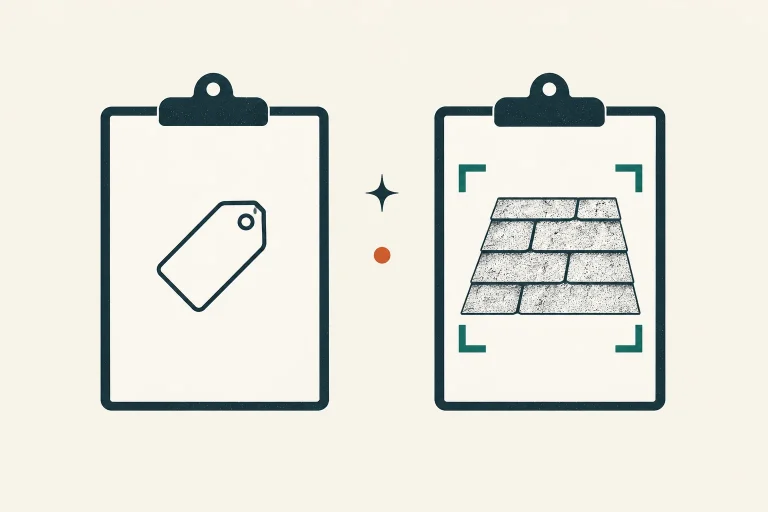

A roof inspection and a free roofing estimate may happen during the same visit, but they answer different questions.
- An inspection documents visible conditions, limitations and recommended next steps within an agreed scope.
- An estimate describes work a contractor proposes to perform, the materials and price.
Choose the service based on the decision you face—not the word printed on the appointment page.
Side-by-side comparison
| Feature | Roof inspection | Free roofing estimate |
|---|---|---|
| Main question | What is visible, and what needs verification or action? | What work does this contractor propose, and at what price? |
| Payment | Usually a fee | Commonly no charge |
| Incentive | Inspection fee; may or may not include referrals | Potential repair or replacement sale |
| Deliverable | Findings, photos, limitations, priorities | Proposed scope, quantities, terms and price |
| Best use | Uncertain cause, transaction, second opinion, broad condition record | Comparing bids for a defined problem |
InterNACHI’s standard is one example of inspection scope: a non-invasive visual examination of accessible areas, with roof coverings, gutters, downspouts, penetrations and accessible structure included. It does not require roof walking, service-life prediction or certification.
Start with an inspection when
- you do not know whether the issue is roofing, condensation, plumbing or another source;
- a home purchase or sale needs a condition record;
- a broad replacement recommendation lacks evidence;
- repeated repairs have not solved the problem;
- structural or attic evidence needs a different specialist; or
- you want a second opinion from someone who is not bidding the work.
Start with estimates when
- a documented report already defines the location and repair objective;
- you need comparable bids for known work;
- a small, visible repair is straightforward; or
- you are selecting materials, schedule and warranty terms for planned replacement.
Ask every bidder to respond to the same scope. Otherwise, a low bid may simply omit flashing, decking allowances, permits, disposal or cleanup.
When one visit includes both
Many contractors inspect before estimating. That can be efficient. Ask them to separate three things in writing:
- Observed condition — what and where they saw it.
- Interpretation — why they think it matters.
- Proposal — what they recommend doing and what it costs.
That separation helps you compare evidence even when proposed remedies differ.
Questions before scheduling
- Will I receive a condition report, estimate or both?
- Are photos tied to identifiable locations?
- Are attic or interior areas included?
- What access method will be used?
- Does the provider sell all recommended work?
- Is there a fee if I do not proceed?
- What permits, cleanup, warranty and exclusions appear in the estimate?
The FTC recommends multiple written estimates after disasters and says each should describe the work, materials, timing, price and contractor contact information. It also warns against relying on a contractor to decide what insurance covers.
A practical sequence
For an uncertain or expensive problem: obtain a scoped inspection, clarify unanswered areas, then send the same findings to multiple qualified contractors. For a simple known repair: obtain itemized estimates and ask each contractor to document anything that changes the scope.
Related guide: Before accepting a no-cost visit, review how to tell whether a free roof inspection is legitimate.
Sources
- InterNACHI Standards of Practice, visual inspection scope and roof limitations; accessed October 17, 2026.
- FTC weather-emergency contractor guidance, estimates, contracts and coverage warnings; accessed October 17, 2026.